I’m Laura Bartolomeo, an elementary music educator with 40 years of public school teaching experience. Music, movement, and play are at the heart of my educator life, whether I’m creating Orff arrangements, sharing tips about elementary music, or creating resources for Oodles of Music. Outside the classroom, I'm a mom, wife, teacher, reader, gardener, trekkie, sci-fi fanatic, musician, dog lover, and a Christian. I hope my contributions bring some joy and happiness to your life!
“We Shall Not Be Moved” transforms itself into a song to remember Black History, Civil Rights, freedom rights around the world, and the power of music with its simplistic style perfect for learning in the music classroom. Perfect for exploring in class or performances, and easily integrated into-
Originally published November 29, 2022 Updated October 12, 2026 Written by Laura Bartolomeo
You need to have several “tricks” to pull out of your back pocket when kids need to have a brain break, to expend some energy, to divert attention from something else going on in the room (a potential meltdown for ex.), to prepare them for a high-concentration activity, or when you the teacher need to have a mental break yourself.
And so, the Jumping Game was born!
Stand in a circle
Play a song with a good beat (see Spotify playlist below)
T stands on the outside of the circle and taps a child on the shoulder.
That child goes into the middle and begins to jump
Prepare kids for the jumping game by talking about how they can be creative by using feet together, feet apart, 1 and 2-foot jumping/hopping, use of arms, bending knees, turning as you jump, etc.
Everyone in the circle imitates the leader in the middle
T occasionally comments about some of the fine points of the jumper. “Ooh, did you see how they alternated bending their elbows as they jumped?”
Tap the next child in the circle after about 10 seconds, continuing to make your way around the circle.
In a class of 25, this gave the class about 4 minutes of jumping.
Do you need a ukulele storage solution for your classroom? Maybe the ukes are new or you’ve had them a while and your current storage isn’t working. Here are lots of ideas for hanging, shelf, and rolling cart solutions, or repurposing storage in your classroom.
Commonly Used Hardware
Some of these items are from Amazon and as an Amazon Affiliate, I may earn from qualifying purchases.
Wall Mount Hanger 6 Pack, with Screws – Easy To Install – Fits All Size Guitars, Bass, Mandolin, Banjo, Ukulele Set of 6
Heavy Duty Vinyl Coated Screw-In Tool Hanger 50 lbs from Home Depot. A little over $2 each.
I initially used this toy storage bin (to the right) to store my ukuleles. (to the left) I used the tubs, which are SO strong, for small percussion storage in a shelving unit. Loved that the bins were in different sizes.
If you are looking for an accessible instrumental piece in 6/8 meter for barred instruments with an Orff arrangement, this is it! Taught step-by-step, this classic tongue twister rhyme is perfect for winter, spring, or really any time of the year there is weather 🤣.
An added plus is the language arts lesson on synonyms. Put that on your end-of-year evaluation!
For grades 3-6, this over 50-slide resource is in both PowerPoint and Google Slide versions. Listen to the music on TPT!
Learning how to use Blooket in elementary music is just understanding the basics of the game, assessment opportunities, safety reminders, SEL considerations, and using a list of games I’ve created.
Blooket was created to imitate video games that kids love. It is Kahoot with more game options and can be played solo and as a class.
Hanukkah is the Jewish Festival of Lights and is celebrated on different days every year. Based on the Hebrew lunar calendar, it usually falls in December.
In music, I like to take all celebrations, holidays, and observances and look at several factors that are common to all of them-food, colors, traditions, and music!
I then love to teach about them using a book, game, dance, and music. Wish we could add FOOD!
Exploring Cultural Traditions With Music
October through December is a perfect time to talk about traditions including Diwali, Halloween, Day of the Dead, Thanksgiving, Hanukkah, Christmas, and Kwanzaa.
I always asked, “Does everybody in the world celebrate everything?” It was a way to say that we can learn about it all, even if we don’t personally celebrate it.
It’s a great way to honor each child, which is culturally responsive teaching, and expose them to new cultures.
It was especially wonderful if there were children who celebrated Hanukkah and would share about their traditions.
This post may contain affiliate links. I make a small commission at no additional cost to you. Read my full disclosure.
Hanukkah Resources
Books About Hanukkah for the Classroom
Board books and simple rhyming texts work beautifully in the music room because students can absorb meaning visually while you highlight musical or cultural elements.
Hanukkah: The Festival of Lights
I love to use board books or ones with rhyming words. I want the learning to come mainly from the images.
Hanukkah Songs
I Have a Little Dreidel SONG
This classic song is an easy entry point for students. You can:
Sing the traditional melody
Add simple motions
Let older students accompany on classroom instruments
Connect the lyrics to the real dreidel game
HanukPop Demon Hunters Maccabeats Hanukkah Medley
What a combo! The Medley includes Latkes, My Idol, Spinning Top, Still Golden, and What It Sounds Like.
Hanukkah Games
The Dreidel Game
We always played the Dreidel game in class. Slides with the meaning for each side of the dreidel were projected so groups could refer to it. I played with K-5 and they always looked forward to this every year.
I found dreidels in bulk at Target (ages ago before Amazon) 🤣 and then bought pony beads for the “candy.”
Hanukkah Music Activities with Instruments
Easy Ukulele Chords C & G7 for The Dreidel Song
If your students play ukulele, Hanukkah is a great time to introduce or practice C and G7 chord changes using simple songs like “I Have a Little Dreidel.”
Hanukkah Google Slides Presentation
This Google Slide presentation was shared by Ms. Stern from the Facebook Music Teachers Idea Bank group. It has lots of different activities to learn about Hanukkah. She says to feel free to change the bitmoji and make it your own!
Here are some favorite lesson plans and activities for the music classroom to teach The Nutcracker Ballet plus some NEW resources to spark life into our teaching of this perennial classic.
The Playlist
This post may contain affiliate links. I make a small commission at no additional cost to you. Read my full disclosure.
For Older Students: PLAY the Chinese Tea Dance on Barred Instruments
With its call and response form, this is the perfect barred instrument activity for December!
PLUS, movement ideas using partners and the whole class with and without props!
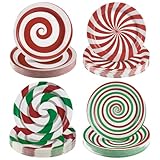
These items from Oriental Trading Company can be used for Nutcracker Ballet-themed concert and classroom decor, student crafts, and movement activities.
Nutcracker Plates, Cups, and Napkins
Nutcracker Large Backdrop for Stage & Classroom
Nutcracker Felt Craft Kits
Nutcracker Candy Stripe Tablecloth Roll
Books
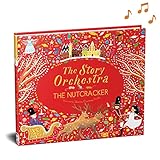
These are two of my favorite books to use in the classroom. Both are so engaging, one with the pop-up feature (on the left) and musical selections (on the right). I even bought a second copy of the pop up book because I used the original one for so many years.
At this school, students were asked to bring in a family Nutcracker and were put into this fun Nutcracker Museum display! (Remember to have the student’s name and room clearly labeled.)
Add this to your end-of-year evaluation Danielson (or similar) Domain 1b: Teacher-designed opportunities for families to share their heritages.
Nutcracker Play Along Videos
March of the Toy Soldiers-Barred & Sticks (Gr. 2-5)
Lesson Ideas
March of the Soldiers Movement Activity
Motion Terms March-in place or around room Flick-hands/fingers flick similar to flicking water on someone Wind Up Toy-arms bent (mechanical looking) and move from waist up/down like a wind up toy Scurry-fingers are like a little mouse scurrying down arm
A: March slow 8, then right hand flicks 4 times quickly from high to low, repeat on Lt side high to low, then both arms flick 7 at same time from low to high with a clap on beat 8 (repeat) B: March slow 4, wind down toy DOWN for fast 4 then UP for fast 4 (repeat) (kind of like the robot dance 🤣) A: C: Rt fingers scurry down left arm, repeat on other arm (repeat) A: B: A:
Here’s a video of the movements that I made for a newsletter subscriber while I was on vacation in Moab, Utah!
Originally published November 10, 2022 Latest Update September 15, 2026
Find interactive Jose Feliciano music lesson plans including Orff arrangements (Feliz Navidad), rhythm activities, and biography info.
I remember my older brother playing (on guitar and recordings) José Feliciano songs. I instantly fell in love with Feliciano’s sound and cool vibe and have followed him for years.
Each of these resources is a multi-lesson unit filled with the song, Orff arrangements (for most), and activities that include for Boomwhacker! The slides guide your teaching and your lesson plans just got EASY!
Bought Me a Cat uses mi, re, do (BAG) patterns The Mitten uses so, mi, re, do (G EDC) Cobbler uses a pentatonic activity-do, re, mi, so , la (CDE GA) Miss White uses la-based so, la, do, re, mi (DE GAB) Turkey Strut uses a diatonic melody D, E, F, G, A, Bb, and C Waltz of the Drumsticks uses chord playing to a “cantabile” song. Over the River uses the diatonic melody in C of this classic song.
Boomwhacker Songs With Book Connections
Allegro (K-3)
The story of a boy who hates practicing the piano and goes on a Classical music journey. A follow up is a keyboard activity using Boomwhacker colors that is the perfect echo play experience. Check out full lesson plans on the Musical Storybooks blog post.
Trombone Shorty (Grades 3-5)
Learn all about Trombone Shorty through his read aloud book and then play a fun Boomwhacker piece to “Where Y’At?” Check out the full lesson plans on the Musical Storybooks blog post.
🌈 How do you teach and introduce kids to play Boomwhackers?
Like any instrument, you need to have a few routines and procedures in place.
How to Pass Out and Collect Boomwhackers
There are many ways to pass out and collect Boomwhackers. The objective is to get it done quickly and safely. Here are some options.
If your storage is portable, such as in buckets, you can place them in several locations in the room and let students get their instrument. The different locations will prevent congestion to keep things quick and safe.
Another option is for the teacher to be in charge. This will take longer but will let you give them to the students who show readiness.
Designating student leaders works efficiently. One student can hand out all the Cs and Ds, another the Es and Fs, etc.
How to Play the Boomwhacker
What’s your verb going to be? “Play” your Boomwhacker? Or hit, tap, whack? 🙃 The end goal is to make beautiful music. (Well as much as you can expect from a plastic tube called a Boom Whacker!) I thought tap sounded the best-descriptive with a lightness to it! haha Here are some possible ways to tap it.
Tap hands-a nice light sound.
Tap the floor-a sharper sound and there was a BIG rule to tapping the floor. The ENTIRE Boomwhacker tapped, not just the end. If they tap the end, the Boomwhackers will eventually bend and get misshapened.
Tap your foot-a kid favorite and thunky sound. Going back and forth between both feet (sitting on floor) gives a fabulous tremolo.
Tap a chair-It has to be a light tap on the back, seat, or leg of a chair to keep from bending the instrument.
Tap with a mallet-Place on the floor and lightly tap with a mallet. This wasn’t my favorite way because the sound isn’t very loud and kids tend to want to smack the heck out of the tube with their mallet to get it to make more sound.
Resting Position
Always designate a resting position so that when the you give the designated phrase or signal, the instruments will be put in this quiet spot.
Resting positions can be on the flat on the floor with your hands in lap, holding it on your shoulder, lay it across your lap, etc. This will need to be practiced first with a pretend Boomwhacker and then with the instrument.
Boomwhacker Safety
The bottom line, a Boomwhacker is an instrument to make beautiful music and should never be used to hit or touch anyone or anything. Make this clear before you hand out a single instrument.
🌈 Boomwhackers! How many do I need?
How many sets do you need? Amazon is a mess when it comes to looking. West Music and other companies are better, but the actual Boomwhacker site is the BEST! Whether you are playing mainly diatonic pieces or a mix of diatonic and pentatonic activities, the Classroom Pack (BW54TB) is the best deal. It comes with Chroma-note stick ons and a tote bag. While you can buy the same items individually $14 cheaper (less the tote and stickons) if you are going the diatonic route, it’s substantially cheaper for the ability to play pentatonic melodies too.
Let’s break it down. Four diatonic sets will give you 32 notes for diatonic melodies and 20 notes for pentatonic. (I’m not counting high C) If you do count high C, you could then get away with buying one less pentatonic set and save an additional $20 by not buying the classroom pack.
🌈 Storage Ideas
Finding the right Boomwhacker storage doesn’t require expensive, purpose-built organizers. Many music teachers successfully store Boomwhackers using repurposed classroom containers such as magazine holders, hanging shoe organizers, plastic buckets, bins, and drawer units.
These storage solutions make it easy to sort boomwhackers by color/pitch, keep them visible for quick student access, and maximize limited classroom space.
Whether you need vertical storage, portable containers, or wall-mounted options, creative Boomwhacker storage can improve classroom organization and speed up transitions during music class.
Buckets are a great option and the one I used in my classroom!
Storage Buying Options
AROUY Vinyl Storage Organizer – Vinyl Roll Holder Wall Mount/Over The Door, Craft Vinyl Storage Rack, Hanging Organizer Storage with 48 Roll Compartments (48 – Gray) (affiliate link)
The Oodles Weekly Newsletter & FREE Resource Library
Grab FREEBIES in the Teacher Resource Library, plus a once-a-week email full of the best, time-saving lesson plan ideas!
Originally published October 29, 2022 Latest Update April 16, 2026
Having elementary students memorize music and be concert ready can be tricky and time-consuming. This post will give you multiple tips and techniques, including incentives, checklists, and games, for learning and memorizing music to prepare your students for a concert.
The Playlist…
Learning the Music
Here are tips to help students learn and memorize their concert music. You can use teaching techniques, games, incentives, and challenges to keep the lessons varied and interesting.
Help Students Learn Music Using Rhythm, Melody, and Lyrics Techniques
Project lyrics using Google Slides or PowerPoint in grades 2 and above. For PreK-Grade 1 you can project some key words/image icons that begin phrases although many times, I taught the songs by rote with no projection. I tried to pick songs for the younger kids that had lots of repetition so learning the text wasn’t a problem.
Have students analyze the text looking for repetition, similarities, and differences.
Let students find the rhyming words and use color-coding on your slides.
Depending on the song, you may want to echo sing phrases, learn by listening to a recording, practice a few probable melody or rhythm trouble spots with echoing.
If the song is wordy, learn the chorus first and then slowly add the verses.
Sing a cappella sometimes so they can really hear themselves and the class.
As much as possible, do not sing with them. They will become stronger singers as you get away from singing with them or using full-performance tracks.
It’s really hard for kids to learn a song by repeatedly singing with a full-performance track. A full performance track can be an introduction to the song. Use the accompaniment track if you aren’t using piano, guitar, other, etc.