I’m Laura Bartolomeo, an elementary music educator with 40 years of public school teaching experience. Music, movement, and play are at the heart of my educator life, whether I’m creating Orff arrangements, sharing tips about elementary music, or creating resources for Oodles of Music. Outside the classroom, I'm a mom, wife, teacher, reader, gardener, trekkie, sci-fi fanatic, musician, dog lover, and a Christian. I hope my contributions bring some joy and happiness to your life!
Discover how you can create a meaningful and joyous celebration that embraces the spirit of Grandparent’s Day with the best engaging songs, skits, scripts, classroom activities, and program ideas. Find a new song or idea to make this year’s program fabulous.
Originally published June 30, 2023 Latest Update July 26, 2026
This post may contain affiliate links. I make a small commission at no additional cost to you. Read my full disclosure.
Table of Contents
When is Grandparent’s Day?
While there is a set national holiday for Grandparent’s Day, some schools choose their own dates that may or may not fall close to the national day. Here are the national dates for the next few years.
2026: Sunday, September 13
2027: Sunday, September 12
2028: Sunday, September 10
2029: Sunday, September 9
2030: Sunday, September 8
What is Special Person’s Day?
Special Person’s Day is often a replacement for Grandparent’s Day because it offers more flexibility to who a child can have attend. In addition to a grandparent, the special person could be another relative such as an aunt, uncle, parent, or guardian, but it could also be a family friend.
Classroom Activities
Some of these special days let grandparents and special persons follow the child’s schedule which means you’re going to have guests in your room.
Have seating ready for them!
Singing, dancing, and playing activities provide a great experience for the students to “show off” to their special persons and grandparents.
Two great options are
letting the guests watch the students in these activities
or joining in with them
I always went for the joining in!
Do a favorite dance, rhythm stick play along, or singing game.
My absolute FAVORITE is “I Let Her Go Go.” This partner changing game allows kids without a special person to interact with those very special guests.
Grandparent’s Day Songs By Theme
Thinking out loud here. According to Google 🤣, the average age to become a grandparent is in your 50s and 60s. If your grandchild is 5-12 years old, that makes grandparents in the 55-72 year range.
In 2025, it means those grandparents were born in the 50s, 60s, and 70s. If high school (16 years old) was a prime music genre era for most, that means music from the 60s, 70s, and 80s would really resonate with most of them. Here are some script ideas!
Looking ahead. In 2030, the 55-72 age range means these special persons were born in 1958-1975 so high school years were the 70s, 80s, and 90s.
Beatles’ Songs
When I’m 64
Yellow Submarine
Octopus’s Garden
Love Me Do
With a Little Help From My Friends
All You Need Is Love
70’s Songs
I Just Called to Say I Love You
Rainbow Connection
Lean On Me
ABC
Joy to the World
Top of the World
Love Will Keep Us Together
I’d Like to Teach the World to Sing
Rockin’ Robin
Rapper’s Delight (the first couple of verses only)
Greatest Love of All
Ain’t No Mountain High Enough
80’s Songs
Walking On Sunshine
I’m Still Standing (wordy so you could have solos on the verses and then everyone come in on the chorus)
Songs With Instruments for Your Special Person Day
THE BEAT OF LIFE (Grades 3-6) With its descending bass line reminiscent of the 60s and 70s rock anthems, your students will WOW with this fun Orff arrangement that your grandparents and special persons will TOTALLY relate to! For barred instruments and optional ukulele, recorder, and Boomwhacker parts.
GIVE THANKS (K-3) This beautiful, lyrical, easy-to-learn song has a B section that you can personalize to the special persons in attendance. The easy Orff arrangement enhances the sound of those beautiful children’s voices.
LOVE SOMEBODY (K-3) This classic song with new B section is heartwarming when performed with heart props. The simple melody, supporting and easy Orff arrangement, and heartfelt sentiment is perfect for the special people in our lives. For barred instruments and optional ukulele.
Grandparent’s Day Songs – Singles
Music K8
Music K8 has LOTS of songs written about grandparents. Some teacher favorites are Happy Grandparent’s Day, So Glad to See You, A Song for Grandparent’s Day, Family Reunion, Blessings On This Day, We Love Our Grandparents, Happy Grandparent’s Day, What Do You Call Your Grandma/Grandpa? and more.
Sheet Music
Sometimes your Special Person’s program needs just a song or two. Here are some examples of songs about love, grandparents, and happiness.
My Girl/My Guy by Smoky Robinson changed to Grandma/Grandpa
Grandma’s Hands by Bill Withers
Grandpa (Tell Me ‘Bout the Good Old Days) by The Judds
Re-write of All About That Bass
Newsletter & FREE Resource Library Join the hundreds of teachers who have the Oodles Newsletter delivered to their inbox every Monday morning with the latest content creator videos and resources.
Grab FREEBIES in the Teacher Resource Library, plus a once-a-week email full of the best, time-saving lesson plan ideas!
Grandparent’s Day Skits
Here are links to some fun skits! Pair a skit with several songs for a meaningful program for those very special people!
Music teachers naturally infuse so much SEL in the music classroom! Let’s discover the many ways SEL is already infused and integrated into elementary music curriculum, procedures, and processes. We’ll pinpoint what is already naturally occurring and add some new ideas to integrate social and emotional learning into the music classroom.
Teachers often use books/literature with an embedded SEL-themed competency such as self-awareness, self-management, empathy, etc.
But they are doing so much more!
The CASEL (Collaborative for Academic, Social, and Emotional Learning) Framework is a comprehensive approach to promoting social and emotional learning (SEL) in educational settings and includes five competencies.
SEL in the Music Classroom
Self-Awareness in Elementary Music
The ability to accurately recognize your emotions and thoughts and their influence on behavior.
The ability to accurately assess your strengths and limitations and possess a well-grounded sense of confidence and optimism.
This includes confidence, self-efficacy, and a growth mindset.
A Mindful Activity
Body Shapes is all about students taking 3-5 minutes to move their bodies and relax their minds as they experience SEL through global music and movementas a class starter, brain break, or mindful way to transition to the next class or subject.
And now! Body Shapes 2: Genre Jukebox. The same great concept but with music choices from musical genres!
Self-Management in Elementary Music
The ability to effectively regulate your emotions, thoughts, and behaviors in different situations. This includes managing stress, controlling impulses, motivating yourself, and setting and working toward achieving personal and academic goals.
Related Activities
Concert Checklist: Organize your concert planning and preparation with checklists and best practices. Here are tips on choosing the music, concert themes, teaching timelines, and logistics.
Concert-Ready Students: You’ll find multiple tips and techniques for learning and memorizing music to prepare your students for a concert including incentives, checklists, and games.
Relationship Skills in Elementary Music
This ability to communicate clearly, listen actively, cooperate, work collaboratively to problem solve and negotiate conflict constructively, navigate settings with differing social and cultural demands and opportunities (cultural competency), provide leadership, and seek or offer help when needed.
Multi-Cultural Resources
Songs and Dances from Authentic Sources: A page that aims to provide resources that I’ve researched or from sources who also research with the same authentic goal.
Social Awareness in Elementary Music
The ability to feel compassion for others, understand broader historical and social norms for behavior in different settings (including unjust ones), and recognize and understand the influence of family, school and community resources and supports.
Related Resources
The Oodles Calendar of Events with lesson plans, resources, and activities. (Hispanic Heritage Month, Native American Month, Veterans Day, Halloween, Black History Month, etc.)
Responsible Decision-Making in Elementary Music
The ability to make choices based on ethics and safety and to consider the benefits and consequences related to personal, social, and collective well-being.
Join the hundreds of other teachers who get the Oodles Newsletter delivered to their inbox every Monday morning filled with content creator’s latest videos and resources that will save you time.
Processing…
Success! Use the PW: MUSIC4LIFE to unlock FREEBIES on the Subscriber Spot tab in the top menu!
Whoops! There was an error and we couldn't process your subscription. Please reload the page and try again.
Ruth Crawford Seeger, composer and folk music specialist, had an amazing career and influence in the world of classical and folk music. Her music was different and exciting because she mixed old and new sounds together. People of all ages still love listening to her music today.
1901: Born on July 3 in Ohio
1919-1921: Attended the American Conservatory of Music in Boston
1932: Married Charles Seeger
1953: Died in Maryland
Ruth and Charles had four children: Mike (folk musician), Peggy (folk singer), Barbara, and Penny. Ruth also had three stepsons Charles, John, and Pete (folk singer/activist.)
Early Music Period (1922-1929)
1920s: Ruth began studying piano performance but switched to composition.
Originally published June 22, 2023 Latest Update July 22, 2026
Do you need creative yet cheap, quick, and easy bulletin board ideas? Get ready to transform your classroom or hallway bulletin board into an inspiring and interactive space with these sure-to-engage ideas. You’ll find-
seasonal displays that celebrate the beauty of each time of year
back-to-school themes that set the stage for a successful academic journey
music-inspired boards that inform and entertain
jumping off points to engage and create SEL discussions
This post may contain affiliate links. I make a small commission at no additional cost to you. Read my full disclosure.
Don’t spend hours making bulletin boards at the start of the year! Get this pre-made bulletin board on Amazon!
Are you in a panic when your school’s electricity goes out, the projector bulb goes pop, you need emergency sub plans, or your computer is on the fritz? Make this no-tech, low-cost Jeopardy board and you’ll be ready for any emergency! Say goodbye to technology and hello to an innovative, interactive, and budget and sub-friendly game that will make learning music (or ANY subject) an absolute blast!
What is a No-Tech Jeopardy Game?
A no-tech Jeopardy game provides an opportunity to combine music education with a thrilling game show format any time and in any situation. A music teacher or sub with no musical background, can walk in and without hitting a power button of any kind, have great learning K-5.
Modeled after the popular TV show, this interactive game allows students to answer questions, earn points, and engage in friendly competition. By transforming your music lessons into an exciting game, you can foster a love for music, encourage teamwork, and enhance student learning in a playful and memorable way.
Did I mention that it folds down to an easy-to-store rectangle?
Are you ready to add barred instruments to classic songs and games? This All Around the Buttercup resource includes an easy Orff arrangement that is taught with body percussion, speech, and great visuals. It includes the classic game and a new one or two with some fun twists. Buttercup is a wonderful song to teach quarter notes and rests and eighth note pairs, as well as so, mi, re, do patterns.
Discover the best AI tools for music teachers with time-saving benefits for the teacher and broader curriculum choices for students. AI offers a powerful ally for music teachers, freeing up valuable time by-
streamlining administrative tasks
creating and personalizing instruction
providing time-consuming research
creating music
Explore how AI empowers music educators to focus on what truly matters – nurturing musical talents and fostering creativity.
Let’s look into the time-saving and (hopefully) stress-reducing efficiency unlocked by AI and the many sites that will be available to us over the next few years.
Reminder: AI is ONLY a tool. Teachers should vet all generated information very carefully.
Charts, Graphics & Visuals That POP
There are more AI tools popping up than boy bands in the ’90s. Just when you think you’ve found the one, here comes another with frosted tips promising it’s different.
Guess what? This new app, Napkin, is a shining star!
Turn text into VISUALS to differentiate your teaching BIG TIME! Show sequential processes and directions with a cool graphic. Eye catching and engaging!
Watch how I made a graphic on How to Create Parachute Routines!
The BASIC Plan is FREE and you get 50 credits that renew daily (10 songs).
You have to log in to use it so this would need to be a whole-class lesson. Each prompt produces a set of lyrics and two song examples.
It is SOOOOO fun!
Create a class song
One music teacher on FB used it for each class to create an end-of-the-year song for their classroom teacher. They plugged in lyric suggestions that related to all the things they love about their teacher. It was evidently a very meaningful gesture that had lots of tears of joy.
Here’s a song that I created with this prompt: “An emotional pop ballad about Mrs. Bartolomeo the music teacher being very tired at the end of the school year.” Pop Ballad
You can download a link, audio, or video. If you download video, it plays with scrolling lyrics! ❤️❤️❤️
Create a National Anthem
This idea was created as an idea for Music Olympics activities. My prompt was: “Create a stately national anthem with lots of brass instruments for the nation of Musicopolis where there’s creativity, fun, and learning with music.” (use “nation” instead of “country” or your national anthem will have a distinct country genre feel to it.) 😊 Here are the two created examples. Song 1 and Song 2.
Fadr
Fadr is an AI-powered vocal remover, song splitter, key/tempo/chords detector, remix maker, mashup maker, DJ controller, and more. I used it successfully to remove vocals from a current pop song that I had downloaded from Apple Music as an mp3.
The resulting vocal removed mp3 was pretty much a karaoke. I downloaded it and there were no pop ups or other odd things that sometimes happen with these types of online programs.
Like everything though, download at your own risk. While it seems like a secure site, I can’t tell you definitively that it is totally safe.
Generating Written & Digital Assignments
Music educators don’t deal with written assignments and assessments often. Our classes are mainly hands-on, action-based learning. When we need a written/digital assignment that aligns with our curriculum, it often becomes a huge time suck.
Why use written/digital assignments in the music room?
What are some of the reasons music teachers need written/digital assignments? Let’s take a ukulele unit as the example.
We need a sub plan and want to continue with learning about the ukulele but know that we absolutely don’t want a sub using the instruments.
A student has lost playing privileges because of unsafe use of the ukulele and needs to continue to learn about the instrument in a different format.
An entire class has been off-task and needs a reset.
We only have enough instruments for half a class and want students without instruments to have a quality assignment rather than “waiting their turn.”
Types of Assignments
Multiple Choice
For guided reading or general information activities and assessments, use a multiple-choice format.
These can be used:
in hard-copy print
with devices using Google Forms, Kahoot!, Quizizz, Gimkit, Canvas, Blooket, moodle, and more!
Printed Copies
Write this prompt. “Use the following article about Mozart to generate 10 multiple-choice questions. Give two printable copies, one with the correct answers annotated by placing a check mark (√) at the beginning of each correct response and one without. Add a list of the 10 correct responses for easy grading.” (add Mozart biography here)
Type in a video URL and some AI models can generate questions. One example is the beta app twee. (see video and table below for more info)
Here is a multiple-choice example using a Ted-Ed video on brass instruments.
Fill-in-the-Blank
twee also lets you type in (or have it generate) text and create a fill-in-the-blank assessment.
Streamlining Assessment & Grading With AI
Music educators face a unique challenge: grading hundreds of students across multiple classes. When you’re teaching 400-600 students per week, even the most organized seating chart system can become a bottleneck.
Seating Chart to Grade Sheet Hack
One of the biggest time-sucks in music education is transferring grades from seating charts into alphabetized gradebook formats. Here’s how AI can transform that 45-minute task into a 2-minute process.
How It Works
Step 1: Update Your Seating Chart Format Instead of first names only, use first name + last initial (Tom A, Carrie B, etc.). This small change gives you enough specificity to match students in your gradebook without needing full rosters.
Important Consideration
Check with your school and district about their guidelines for using names in AI models. Would first names and last initials follow those guidelines?
Step 2: Use AI to Process Your Chart Upload an image or document of your seating chart to an AI assistant (like Claude, ChatGPT, or similar tools). The AI will:
Extract all student names and their corresponding grades
Alphabetize the list by last initial
Create a formatted table with columns for each assessment category
Leave blank cells for missing grades so you can easily identify incomplete assessments
Step 3: Export and Use The resulting table can be easily copied into Google Sheets, Excel, or used on its own as you input grades into your grading system. No more rewriting, no more searching, no more back and forth from one type of setup to another.
Why This Works for Music Teachers
Handles Large Numbers: Perfect for specialists who see entire school populations Flexible Assessment Types: Works with any grading system – plus/check/minus, standards-based, letter grades, or numeric scores Time Savings: What used to take 30-45 minutes now takes 2 minutes Error Reduction: No more transcription mistakes or missing students Easy Updates: Run the process multiple times throughout the year for different assessment periods
Tips for Success
Be consistent with last initials on your seating charts from the start of the year
Keep multiple classes in one document by adding a “Class Period” or “Grade Level” column
Add a notes column if you track specific observations beyond the basic grade
Try It Yourself
Ready to streamline your music grading? Watch the full tutorial video above or use this info as a brainstorming session, tweaking to fit your needs!
What assessment challenges are you facing in your music classroom? Drop a comment below – I’m always looking for new ways to help music teachers work smarter, not harder!
Video Reviews | AI Tools for Music Teachers
Diffit
twee
How to Generate the Best AI Responses
How to Use Effective AI Prompts
You can ask an AI bot a question and then ask them to clarify
OR
you can FIRST ask them what they need to know to answer your query.
Examples-
What do you need to know to provide me with…
What information do you need to write a thorough lesson on…
Give your request and add, “What else do you need to know?”
Concert Song Prompt
Here’s an example using ChatGPT: “I need a list of songs for an elementary music concert. What do you need to know to help with this list?”
Here’s Chat GPT’s answer (abridged to save space):
Theme or purpose of the concert.
Age or grade level of the students.
Time duration of the concert.
Musical style or genre preference.
Performance format.
Any specific songs already considered?
Technical considerations: accompaniment, sheet music, or audio resources?
Cultural or sensitivity considerations.
Edited AI Prompt
Here’s my new query using the bot’s suggestions.
I’d like a list of songs for an elementary music concert with a winter theme. The performers are in grades 1, 2, and 3. The concert will be 45 minutes in length. The music should be secular with a mix of upbeat and ballad styles. The students will be singing in large groups and mp3 accompaniments will need to be used. A couple of the songs should be very upbeat. I’d like the song titles, composers, and possible mp3 links.
Here’s the answer I received!(The links are only placeholders. DANG!)
“Winter Wonderland” – Felix Bernard and Richard B. Smith
That’s a great list. Can you give me ten more songs that would fit with my parameters?
Certainly! Here are ten more songs that fit the parameters of your elementary music concert about winter:
“Jingle Bells” – James Lord Pierpont
“Up on the Housetop” – Benjamin Hanby
“The Snow Is Dancing” – Claude Debussy
“Winter Fantasy” – John Higgins
“I’ve Got My Love to Keep Me Warm” – Irving Berlin
“Snow Day” – Justin Roberts
“Winter’s Waking” – Amy F. Bernon
“Sleigh Ride” – Leroy Anderson and Mitchell Parish
“The Winter Song” – Sarah Quartel
“Winterlude” – Neil Young
Use AI to Build on What You Already Teach—No Starting from Scratch
Scenario-Your admin wants to see more higher level questioning. Higher level questioning, SEL, and many other integrations happen all the time (or get real close) in elementary music teaching and we don’t recognize it as such. I think it’s HUGE to take what we are already doing and tweak to come up with what is needed, without starting from scratch.
So this is the perfect opportunity to use AI. I did not want to ask AI to give me higher level questioning for music because I’d get a bunch of things that might not apply to my curriculum.
The Prompt
Instead, I asked for a synopsis of higher level thinking for elementary. It gave me 7 areas-compare/contrast, cause/effect, etc. Then I asked: “Let’s suppose that we are already doing some higher level thinking but don’t realize it. Here are some typical activities. Tell me how to make higher level questioning more obvious. Connect it to one of the 7 ideas you’ve given me above.
1. clap a rhythm pattern and speak it using rhythm syllable. 2. play boomwhackers to a play along video 3. play a singing game.”
The AI Answer
The goal is to take what you already do and add a quick, purposeful question that nudges thinking beyond “just doing.”
1️⃣ Clap a rhythm pattern and speak it using rhythm syllables
Connection:Analyze & Interpret
Make it obvious: After clapping, ask:
“What do you notice about this pattern? Are there any parts that repeat?”
“How would the feel change if we made one note longer or shorter?”
Why it’s higher-level: Students examine structure and predict effects, not just perform.
2️⃣ Play boomwhackers to a play-along video
Connection:Predict & Hypothesize
Make it obvious: Pause mid-song and ask:
“If we swapped the red and green boomwhackers, how would the sound or harmony change?”
“What might happen if we played this twice as fast or half as fast?”
Why it’s higher-level: Students think ahead and reason about cause and effect in music.
3️⃣ Play a singing game
Connection:Evaluate & Judge
Make it obvious: After playing, ask:
“Which strategy helped your team stay in the game the longest? Why?”
“If you could change one rule to make it more exciting, what would you change and why?”
Why it’s higher-level: Students justify choices and evaluate outcomes, not just follow directions.
✅ Tip to make it feel intentional: Before or after each activity, briefly name the type of thinking (“Let’s analyze what we noticed in that rhythm” or “Let’s predict what would happen if…”) so students recognize that they’re using higher-level thinking skills.
Growing List of AI Sites for Teachers
Join the thousands of other teachers who get timely tips, FREEBIES, and trending videos and music delivered to their inbox EVERY week! The Oodles of Music Newsletter!
Processing…
Success! Use the PW: MUSIC4LIFE to unlock FREEBIES on the Subscriber Spot tab in the top menu!
Whoops! There was an error and we couldn't process your subscription. Please reload the page and try again.
Find engaging ways for your students to play BARRED INSTRUMENTS with a NEW easy-to-teach rhyme melody and Orff arrangement, that goes with the CLASSIC song Bounce High Bounce Low.
This song is perfect for you to prepare, present, or practice “la” with its so, la, so, mi pattern as well as for you to teach quarter and paired eighth notes.
The new rhyme extends the learning into a beautiful ternary ABA form and is part of this practically no-prep, multi-lesson resource.
Documenting our effective teaching practices for our evaluations can be daunting. Showing proof with artifacts and documentation gets confusing. This table lets you look up WHAT you’ve taught and then spells out some of the criteria that it checks off.
Determining our professionalism, community involvement, and lesson planning is more straightforward. The below Google Sheet begins to get you thinking about the instruction portion of the evaluation process.
Scroll right and left to show headings: Dances, Body Percussion, Creative Movement, Song Repertoire, Unpitched Percussion, and Ukulele.
Copy and paste or copy and edit the ideas in the table for the artifact or self-evaluation part of your documentation.
Join the hundreds of other teachers who receive the Oodles Newsletter every Monday morning with timely tips to help you in your teaching!
Processing…
Success! Use the PW: MUSIC4LIFE to unlock FREEBIES on the Subscriber Spot tab in the top menu!
Whoops! There was an error and we couldn't process your subscription. Please reload the page and try again.
You might also like these other teacher-related resources.
Originally published April 4, 2021 Last Update April 9, 2026
Looking for simple and fun ways for your music classes to be active and engaged outdoors? Check out these easy outdoor music and movement activities for kids! Why outdoors? To enjoy the weather, quiet time during testing, or just a change of scenery for a brain break.
Table of Contents
This post may contain affiliate links. I make a small commission at no additional cost to you. Read my full disclosure.
Net Games
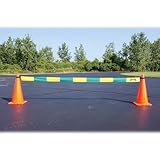
Use multiple setups for whole class play or just one for a station in learning centers. (see images & video below)
The GOAT (A Reverse HORSE Steady Beat Challenge)
The GOAT is a cooperative elementary music passing game where students work together to keep a steady beat while singing. Inspired by the basketball game HORSE, this version flips the idea: instead of earning letters for mistakes, students earn letters when they succeed.
🏆 The goal is simple: earn the letters G-O-A-T by singing and passing the ball correctly.
📋 This game encourages students to focus on the beat, teamwork, and accurate singing while staying fully engaged.
🔹 How to Play the GOAT Game
Students are in 2-person teams on opposite sides of a net. (4 total)
Both teams sings a familiar song or chant a rhyme while passing a ball on the *main beats.
Each pass or bounce should match the beat of the song.
🐐 If the teams sing the entire song without mistakes, they earn a letter. G.O.A.T. 🐐 When the teams spell GOAT, they win the challenge!
🔹 You have to start the song over if:
the hand touch on the ball isn’t on the *main beat (if the hand touch is on beat 1, the bounce is probably going to be on beat 2)
everyone isn’t singing
the ball doesn’t go over the net
*Passing to a STEADY beat isn’t the goal. Passing on the MAIN beat is the goal so their singing tempo may adjust to make it work.
🔹 What songs should I use to play GOAT? Choose songs already in your elementary music curriculum that have a strong, predictable beat. Folk songs and rhythmic chants work especially well because they are repetitive and easy for students to remember. Examples are Big Fat Biscuit, Dusty Bluebells, Pease Porridge, and I Never Saw a Purple Cow.
How to Set Up the Net
You can use 2 chairs and a piece of yarn for the cheapest and easiest setup!
Ask your PE teacher if they have these special nets or purchase for yourself.
I created GOAT after watching this PE class game in the video!
Students will compose short melodic phrases using commonly found household items, such as a rock to create “Melodies that Rock.” Younger students can explore music contour in relationship to high and low notes, while older students can write melodic patterns related to their grade level concepts.
Check out the full lesson plan at the VDOE Link below. Lesson plan was altered and adapted for outdoor sidewalk chalk activity.
Disclaimer: The Virginia Department of Education (VDOE) has not evaluated this resource for content nor accessibility. This material is provided “as-is” without warranties of any kind. Use professional expertise in evaluating and using this resource.
I learned about this game from our PE teacher and kids LOVE it. I tried to reconfigure it for music and came up with Pat, Clap, Snap. The objectives-
brain break
using body percussion
team building
Directions:
Two teams in rows. (red and blue above) The object of the game is to get your player from one end of the hula hoops to the other before the other team. Players must jump (2-footed) from one hoop to the next.
One person from each team begins. Those out go to the end of the line & the next person on your team begins at the beginning.
The red team begins at the green hoop. The blue team begins at the yellow hoop. The configuration of the hoops can be in any design as long as there are starting (ending) points for both teams. (In the gym or outside you have lots of room to curve the course all over the place.)
If your music room isn’t very big or you can’t use the gym or go outside, I think sit spots or bean bags would work. Instead of jumping IN the hoop, you’d jump over each spot/bag.
At some point the two players will meet (be facing each other) and that is when they’ll play Pat Clap Snap.
Instead of Rock, Paper, Scissors’ fist-fist-rock/paper/scissors, they will clap two times and then the third beat will need to either be a pat, clap, or snap. If they do the same motion, it’s a tie and they do it again until there’s a winner. The image above is a visual to help them remember what beats the other.
The winner keeps jumping, the loser goes to the end of their line and a new player for that team begins jumping, hoping to stop the other player. Here is the Rock, Paper, Scissors version.
Earth, Wind, and FIRE
Take any upbeat song such as Earth, Wind, and Fire’s “Let’s Groove Tonight” and create easy movement.
How to Move
Intro (stand and bounce to the beat)
Verse (lots of words so keep it simple-WALK to the beat)
Chorus (easier lyrics so stop and do simple choreography)
arms up, arms out, arms down, arms out (repeat)
Bridge (freestyle)
Walking and freestyle are a snap! Just something simple for the chorus and BAM, you’ve got it.