Originally published February 8, 2026 Updated March 4, 2026
This collection of Jon Batiste music lesson plans provides K-8 educators with ready-to-use interactive activities centered on Batiste’s life, jazz genre, & social music.
By focusing on his work in Soul and his “Social Music” philosophy, these lessons meet National Core Arts Standards in Creating, Responding, and Connectingwhile fostering student engagement through multimodal learning and interactive play.
Used for Editorial Use only from Deposit Photos, 2026
Activity Length Guide-to help you plan and pace your lesson. 🟢 Quick (3–5 min) 🔵 Focused (5–10 min) 🟣 Extended (10+ min)
Table of Contents
Quick Facts About Jon Batiste
Jon Batiste is a world-famous singer, songwriter, musician, composer, bandleader, television personality and actor from Louisiana who loves to spread joy through music!
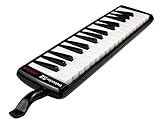
He is a master of the piano and the melodica, has won huge awards like Grammys and an Oscar, and is famous for leading “love riots” that are spontaneous musical parades that bring people together.
Click to open each blue heading.
🔵 Jon Batiste Bio
BORN
Name: Jonathan Michael Batiste Born: Metairie, Louisiana Date: November 11, 1986
🔹Wife: Suleika Jaouad 🔹Children: None 🔹Siblings: 1 sister 🔹Parents: Michael (musician), Katherine (Department of Energy)
EDUCATION
🔹High School-attended the New Orleans Center for Creative Arts with Trombone Shorty 🔹College-Bachelor’s & Master’s degrees in Jazz Studies from Juilliard
EARLY MUSICAL HIGHLIGHTS
🔹Instruments: vocals, piano, keyboards, guitar, melodica 🔹Early Performance: played percussion/drums with his family’s band, The Batiste Brothers Band 🔹Lessons: started piano lessons at age 11 🔹Fun fact: he loved to transcribe video game music like Sonic and Street Fighter Alpha
LEGACY & ACTIVISM
We often think of legacies as something people leave later in life—but Jon Batiste is already creating one with his wide variety of music. 🔹”Apathy is the killer of all that we fight and hope for in our society.” He wrote his “We Are” album to encourage people to care about everything. 🔹”The artist as citizen has a golden opportunity for you to really show and utilize the full power of music to actually make impactful change in people’s lives.”
🟢 How to Play the Melodica With Jon Batiste
Watch how Jon Batiste produces so many sounds with a melodica!
🟢 Cartoons & Game Music With Jon Batiste
Check out Jon Batiste’s love of video game music and cartoon fx!
In general, the cheaper Cahaya brand is more like a toy so go with a good music brand like Hohner, Suzuki, Yamaha.
🟢 Musical Influences of Jon Batiste
INFLUENCES & GENRES
🔹He was born into a musical family including his father, uncles, and cousins. 🔹His influences include Mahalia Jackson, James Brown, Louis Armstrong, Bruce Springsteen, Stevie Wonder, John Coltrane, Nina Simone, Miles Davis, Beethoven, and Django Reinhardt. 🔹Musical genres include jazz, classical, and blues, as well as soul, Americana, and pop.
Watch how Jon changes Beethoven’s music to fit his style!
Find the form of the song by showing these motions!
Chorus: “When I move…”
Verse 1: “I love how you talk…”
Chorus: “When I move…”
Verse 2: “The reason to get down is to get back up…”
Bridge: When I look up to the stars…”
Verse 3: I’m stuck to the dance floor.
Verse 3:
Chorus/Coda: “When I move…”
Social Music Philosophy & Group Activities
Jon Batiste believes in “social music,” the kind of music that brings people together to celebrate life, family, and community.
Social music is music people use to celebrate, remember, and connect with each other.
🟣 Songs for Life’s Moments Class Activity
Have a whole class discussion sharing songs for each category
What songs would you choose for the life events listed below?
Are there any events that you’d add to the grid?
Divide the class into 9 groups, then share out to the class
Bulletin Board & Community Project
Create a bulletin board with song answers from many students
For a wonderful community project, assign the grid to take home for family input
Soul | Jon Batiste Music Lesson Plans
🟢 The Music of Soul: Behind the Scenes Video
Jon Batiste composed and performed the jazz music for Soul, alongside score composers Trent Reznor and Atticus Ross. Here’s a behind-the-scenes look at the music of Soul with Jon Batiste.
🟢 “It’s All Right” Sing-a-long Activity
Verse 1: Say it’s all right. Say it’s all right. It’s all right, have a good time ‘Cause it’s all right, woah, it’s all right Verse 2: Now listen to the beat, and kinda pat your feet. You’ve got soul and everybody knows, that it’s all right, woah, it’s all right Bridge: When you wake up early in the mornin’, feelin’ sad like so many of us do Just hum a little soul, Make life your goal, And surely something’s gotta come to you
🟣 Draw What You Hear to “Soul”
Listen to the instrumental music, played by Jon, from the Pixar movie, Soul, and draw what inspires you. Let the music be your guide. Draw what you hear, feel, or imagine. Here are some ideas. Draw-
pictures
shapes
scenes
Interactive Jon Batiste Music Quiz
🟢 Quick Quiz on Jon Batiste
Quiz CSS block is present ✅
Let’s see what we’ve learned about musician, Jon Batiste. Good luck!
Question 1: Where was Jon born?
Louisiana
Correct! 🎉
Indiana
Nice Try! 😊
Question 2: What is a genre Jon is known for?
Rock & Roll
Nice Try! 😊
Jazz
Correct! 🎉
Question 3: What unusual instrument does Jon play?
harmonica
Nice Try! 😊
melodica
Correct! 🎉
Question 4: What movie did Jon provide the music for?
Soul
Correct! 🎉
Coco
Nice Try! 😊
Question 5: Who did Jon go to school with?
Trombone Shorty
Correct! 🎉
Bad Bunny
Nice Try! 😊
Reload the page to take the quiz again.
Jon Batiste Music Lesson Plan PDF
Here’s the written lesson plan based on the resources on this page. Use it to paste steps into your planner.
Originally Published May 2024 | Last Updated January 31, 2026.
As we prepare for the 2026 Winter Olympics, these music activities will help your students celebrate the games through song and movement.
Summer and Winter Olympics music activities bring the exciting worldwide event into your elementary classroom. Let’s look at the Summer, Winter, and Para Games, and then other general Olympic-themed resources for the elementary music classroom.
Table of Contents
With the 2026 Winter Olympics music activities featured below, you can bring the Milan-Cortina games to life through Italian folk songs and mascot-themed games.
Quickstart Guide
Group grade levels for general Olympic activities (K–1, 2–3, 4–5).
Because of the two year rotations in summer & winter games
Layer in Summer or Winter activities for the current Games.
Teach over 2–3 weeks (pre-Games + during the Games).
Start with a K-5 shared slide deck on Olympic history and add time for student input, “What do you know?”
Extend Olympic values to other events such as field day, March Madness, bowls, championships.
The 2026 Winter Olympics Music Activities & Lesson Ideas
Winter Olympics 2026 Opening Ceremony
The 2026 Winter Games in Milan-Cortina, Italy kicked off February 6, 2026 with a spectacular opening ceremony themed Armonia (harmony). Here’s what music teachers need to know to bring the excitement into your classroom!
Volare
Mariah Carey sang this iconic song of Italy about feeling so happy about loved ones in your life, like you’re flying!
Volare is a song originally recorded by Italian singer-songwriter Domenico Modugno, with music composed by himself and Italian lyrics written by himself and Franco Migliacci. It was released as a single on 1 February 1958.
Lesson Idea: So Mariah’s performance will have more meaning, learn a bit of the chorus, using the video below, before watching her.
Learn the chorus. Listen for these key words: volare (to fly), blu (blue), cantare (singing)
Nessun Dorma
Andrea Bocelli sang this classic aria for the 2026 Winter Games. Written by Italian composer Giacomo Puccini for the opera Turandot, Nessun Dorma (none shall sleep) is one of the best-known tenor arias in all opera, but achieved fame in many other ways. It’s been sung often in films, on television, and at sporting events.
Here he is again singing it at a sporting event and you can hear the crowd singing along with him.
Meet the 2026 Winter Olympics Mascots
Tina and Milo are the official mascots representing the best of Italian culture and winter sports!
At the Fair of Maestro Andrè – Italian Song Perfect for Olympic
Celebrate Italy with this catchy CUMULATIVE Neapolitan folk song! Complete Orff arrangement with barred instruments, body percussion, and fun Italian-themed games.
Perfect song for elementary students to explore Italy during the 2026 Winter Olympic Games!
Summer Games-July 23-August 8, 2032-Brisbane, Australia
What are the Olympics?
The Olympics are the leading international sporting events representing nations around the world. The Games are held every four years alternating every two years between the Summer and Winter Games.
The Olympics for Kids With Jack Hartmann
History of the Olympic Games By BYJU’s
What are the Paralympics?
According to the IPC (International Paralympics Committee), the first Paralympic competition was in 1948 and was for wheelchair athletes. Called the Stoke Mandeville Games, 16 injured servicemen and women competed in archery.
There are currently 28 sports, 22 summer and six winter, but can change from one event to another.
According to the International Olympic Committee, “Taking place every four years in the same year as the Olympic Games, the Paralympic Games have since grown into one of the world’s biggest sport events, with a track record for driving social inclusion.”
Some of our Olympics music activities are directly tied to the symbols of the games.
Olympic Rings-5 interlocking rings in blue, yellow, black, green, and red. Designed by Coubertin in 1913, they represent the 5 inhabited continents and if counting the field of white they are on, also represent the 6 colors used in nation flags. The rings are the design on the Olympic flag.
Flame & Torch-The Olympic flame is ignited in Olympia, Greece some weeks or months before the opening ceremony of the games at the host location. The torch is ceremonially relayed until it reaches the host site during the opening ceremony.
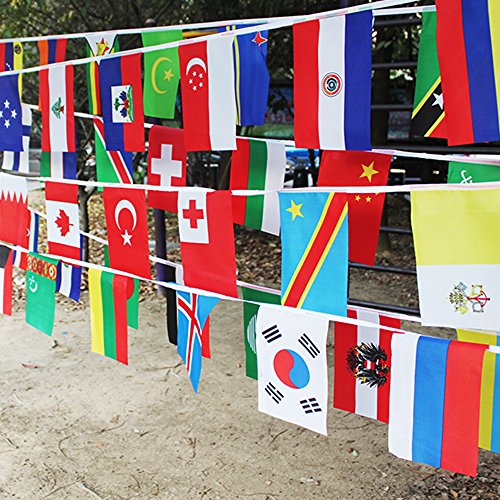
Nation Flags are part of the games to show the country of each participating athlete. Flags and national anthems are a big part of the medal ceremony.
Medals-The Olympic medals are gold (1st), silver (2nd), and bronze (3rd).
♦️ Olympic-Themed Routines & Procedures
Kids LOVE games so why not keep that Olympic theme going all year long with a We Are the Champions activity that helps teach routines and procedures. First, the teacher determines the gold, silver, and bronze requirements for a routine or procedure and then the class wins one of the medals.
♦️ Olympics Music Activities
Olympic Songs With Orff Arrangements
Bring the excitement of the Olympics into your K–5 classroom! These ready-to-use lesson plans feature fun songs, rhythm activities, movement, and games that engage students while making Olympic-themed music lessons easy and memorable.
There have been many songs, anthems, hymns, and music works commissioned throughout the years. Let’s take a look at some of the most memorable ones. Classic fm also has a great chronological list of songs with videos.
“One Moment In Time” sung by Whitney Huston, written by Albert Hammond for the 1988 Winter Games in Seoul.
“Light the Fire Within” from the 2002 Salt Lake City Winter Games was sung by Lee Ann Grimes and written by David Foster and Linda Thompson. Here’s an arrangement by Mac Huff.
“Dare to Dream” was sung at the 2002 Summer Olympics in Australia and sung by Olivia Newton-John.
“Furusato” is a popular Japanese children’s song and was sung at the 1998 Winter Olympics in Nagano. Here’s a beautiful arrangement of it.
Olympics Music Instrumental Pieces
Bugler’s Dream
Bugler’s Dream was written in 1958 by Leo Arnaud and is well known because of its use in television coverage by ABC and NBC. Here’s a choral version arranged by Mark Hayes. Most performances today use the John Williams arrangement that combines Bugler’s Dream with his Olympic Fanfare and Theme.
Bugler’s Dream by the US Army Herald Trumpets
Bugler’s Dream Theme on Recorder
Summon the Heroes
Another favorite, Summon the Heroes, was written by John Williams for the 1996 Summer Olympics in Atlanta, Georgia.
For the 1984 Summer Olympics in Los Angeles, John Williams composed Olympic Fanfare and Theme. In 1996, a new arrangement was created using part of Arnaud’s “Bugler’s Dream.”
Olympics Music Activity: Parachute Routine to Olympic Fanfare
This mp3 is from the old Grade 2 Share the Music textbook.
INTRO Tympani intro: march in place OPENING THEME up and down to beat SECTION 1 a. For16 quarter note beats-step to right a. 16 beats-step to left (walk to beat right, b. For 16 beats up and down (slow 8 count or quicker 4 count for up/down/up/down) a. 16 beats to the right B’: up and down (2 slow or 4 quick) SECTION 2 Parachute up and stays up as several chosen cross from one side of the parachute to the other. (4 counts) Parchute down for 4 counts. REPEAT 3 more times SECTION 1 (repeat above) OPENING THEME (repeat above)
Who is John Williams?
John Williams is one of the greatest and most prolific composers in the 21st century!
Project a pictogram of sports (summer or winter) and have students “show” the sport in motion to the beat of the Olympic Fanfare. Add a Freeze Dance and movement statue idea by stopping the music at certain points.
♦️ Music Olympics: Games & Activities in the Classroom
Use Olympic sports as inspiration for The Music Olympics. It can coincide with a world game event or not. Use a mix of summer and winter sports or keep it seasonal.
Alpine Skiing/Slalom
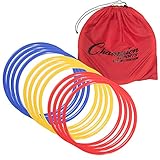
Use agility hoops on the floor for two competitors to navigate by jumping (using pool noodles or rhythm sticks tucked under arms to simulate poles) with a final destination, putting a rhythm in correct order. Have piles of single notes for both contestants to use. Designate students to be the “course crew” to keep the hoops set up nicely between runs.
Which Agility Flat Rings/Hoops should I buy?
Many hoops are WAY too small. The Champion rings are 18″ which is a good size. Palos has great reviews but a bit expensive.
Similar to Big Fat Biscuit, students are broad jumping to see who can go the furthest. Go in 2s, 3s, or 4s. Rap to the beat and get ready to jump at the end. Winners of each round can compete until you have one winner.
Up the snowy ramp I zoom so fast, My skis go shiver-shake-BLAST! I whoosh through the air, arms stretched wide, I stick the landing—“Did you see that glide?” Ready, set, jump!
Figure Skating-Figure Making
Based on why figure skating got its name, making figures on the ice, let’s make human shapes for our music class game, Figure Making!
How to Play
Get into 3 groups. (If you need more groups, you can award extra medals)
Create shapes on 8.5 x 11 paper or in a slide presentation. Great shapes are a circle, square, triangle, heart, X, +, =, and similar.
Groups will have 60 seconds to make the shape/figure.
Award the gold, silver, and bronze medals for the best figures.
You may be standing, sitting, lying down, or any combination of high/middle/low levels to create the figure.
Track Relay
This can be any type of relay, from identifying or playing rhythms, melodies, notes, instrument pictures, etc. Run the events in heats or get everyone going with, e.g., 6 teams of 5 students (for a class of 30). First person on the team runs to a specified point, completes a task (id a note, clap a rhythm, etc.), then runs back so the next person can go
Curling
Tape a giant treble clef to the floor and use a Dollar Tree mop and plastic bowl as your equipment. Teams get points for getting their bowl closest to the “G” curl.
Speed Sports: Skating/Kayak/Bobsled, etc.
Individuals navigate one at a time to a pile of notes or music phrases, bringing them back to their team. When they have them all, they arrange or order them, and first team to complete the task wins. (Treble clef notes could spell a word, rhythms could add up to a number, music phrases to a song that need to be in correct order) The speed sports could be skating (paper plates for skates), kayak (PE scooters), bobsledding (squatting kid in laundry basket with team mate pushing them)
Weight Lifting
The stronger survives! All are sitting in a circle with one student standing behind another. Teacher holds up and object and the first of the two “lifters” to identify it, moves on. If it’s the standing person, they move one person to their right/left. If it’s the sitting person, they exchange with the loser and the winner moves one person to their right/left. I’ve played with instruments and rhythms. Instruments can be as easy as getting a grocery bag and putting in claves, maracas, cowbell, etc. and pulling them out one at a time. You could declare a “winner” if they win 5 or 10 times or they need to make it around the entire circle.
Archery/Target Shooting
Two teams and bean bags. Since the bean bags aren’t going to stick, you’ll need to call it as it hits. Or, position the target on the floor.
Since National Anthems play such a huge part in the awards ceremonies, refresh singing your country’s national anthem and
Learn the national anthem of the host country
Let your students choose two countries and learn the anthems
Then extend this into a unit, letting partners research a country’s anthem and present it to the class. Finally, at the end, play a game where you play the anthem and students (individually or in teams) guess the country based on remembering it from the presentations.
My prompt was: “Create a stately national anthem with lots of brass instruments for the nation of Musicopolis where there’s creativity, fun, and learning with music.” (use “nation” instead of “country” or your national anthem will have a distinct country genre feel to it.) 😊 Here are the two created examples. Song 1 and Song 2.
♦️ Songs Composed for the Olympics
Let the Games Begin
A cute little song about the games beginning, winning the gold, ready, set, go, and an optional kazoo “fanfare.”
Show some video of dressage, highlighting the horse’s movements. These include high steps, locomotion, non-locomotion, sidesteps, walking, cantering with changes of tempo, and length of step. Pathways include straight, curvy, circles. The motions change with the music.
The assignment is to take a pool noodle horse (decorate it if desired) and in groups create a routine to a piece of music. The goal is to change the movement based on the form of the piece. Google pool noodle horse and you’ll find lots of images from simple to elaborate!
A basic pop song would have intro-verse-chorus-verse-chorus-bridge-chorus-outro. Share your routine and the other groups can “judge” you with a 1-10 rating! Kids will love it and you can assess musical form.
♦️ Olympic Decor, Decorations, and Bulletin Boards
The wall image is in my classroom!
I used it year-round so that when we talked about music from around the world, we could look for the flag! The colors pop and putting it up high beautifully uses space that is too high for many other posters or signs.
Find easy, low-prep Star Wars music activities & lesson plans for celebrating May the 4th, learning about John Williams, or exploring science fiction and a space theme!
Teaching ideas have been added to make the videos (more) interactive!
Here are AAPI Heritage Month music activities for the elementary classroom that include videos of great musicians who represent AAPI people.
Let’s listen to Asian American, Native Hawaiian, and Pacific Islander musicians and learn a little bit about them through activities and a little trivia!
What is AAPI Heritage Month?
According to Britannica, “Asian American and Pacific Islander (AAPI) Heritage Month is a monthlong commemoration of the history and achievements of Asian Americans, Native Hawaiians, and Pacific Islanders in the United States.”
Let’s celebrate the contributions of Asian American, Native Hawaiian, and Pacific Islander musicians!
Learn about jazz with these EASY jazz music lessons & activities using instruments, singing, movement, and creating. Perfect for K-8 elementary music.
Jazz is perfect all year long but can be a special emphasis in February for Black History Month, March for Women’s History Month, or April for Jazz History Month.
Table of Contents
This post may contain affiliate links. I make a small commission at no additional cost to you. Read my full disclosure.
Perfect for elementary teachers and substitutes, this collection of read-aloud videos of musical story books will engage and delight. Extend the learning with my BONUS follow-up activities for a complete lesson plan! Ready to teach!
Use the searchable musical elements, subject integrations, and grade levels for pre-school and elementary students. (below)
⭐️ Stars mark the BONUS: A FOLLOW UP for each video with a fun singing game/activity!
How is literature used in an elementary music classroom?
Some teachers purposefully focus on reinforcing both reading and music skills during lessons that integrate children’s literature, while others focus on reinforcing music concepts or skills.
Brown, Holly Ann, “Children’s Literature in the Elementary General Music Classroom” (2019). Theses and Dissertations. 2162. https://dc.uwm.edu/etd/2162
Table of Contents
This post may contain affiliate links. I make a small commission at no additional cost to you. Read my full disclosure.
🟢 Creative OPTIONS for Read-Aloud Videos of Musical Story Books
Read-Aloud videos of musical story books are a great option when you need a screen presentation. Getting the hard-copy book is the perfect intimate setting to read and do your own interpretation, sound effects, and discussion.
Use literature to teach and reinforce specific music concepts (tempo, dynamics, tone color, etc.)
Use books to provide support for pre-reading, reading, and vocabulary exploration.
Great for one-off lesson needs or sub plans
Use related musical games/activities for follow-up interactive learning
Class starter, ender, or transition in the class flow provides routine and structure.
Ruth Crawford Seeger, composer and folk music specialist, had an amazing career and influence in the world of classical and folk music. Her music was different and exciting because she mixed old and new sounds together. People of all ages still love listening to her music today.
1901: Born on July 3 in Ohio
1919-1921: Attended the American Conservatory of Music in Boston
1932: Married Charles Seeger
1953: Died in Maryland
Ruth and Charles had four children: Mike (folk musician), Peggy (folk singer), Barbara, and Penny. Ruth also had three stepsons Charles, John, and Pete (folk singer/activist.)
Early Music Period (1922-1929)
1920s: Ruth began studying piano performance but switched to composition.
A spring classic for the elementary classroom is Vivaldi’s Spring from The Seasons. Are you looking for this classic taught with ACTIVE music-making?
This resource with lots of movement teaches students to play and sing (new Spring lyrics) the main theme to Vivaldi’s Spring Concerto with Orff barred instrument ostinati, AND a recreation of the thunderstorm using instruments.
PLAYING this famous theme, not just LISTENING to it
The “B section” thunderstorm is SO fun
Learning with speech and movement
Differentiated with the use of colors, images, and stepwise learning
An ARTS Integration activity-draw a picture! (see art activity below)
Teacher helpers with
higher-order questions
“I Can” statements
a pre-filled checklist that can go into your evaluation folder
Resource Reviews
Visualizing Vivaldi: A Spring Listening & Art Activity
Now it’s time to draw the imagery the music creates! This is one of my favorite lessons because it extends and complements playing and learning the music, plus it becomes a magnificent bulletin board, “Vivaldi’s Spring: When Music Paints a Picture.”
Connecting Music and Imagination
After reading and discussing the poetic inspiration behind Vivaldi’s Spring—a happy spring day with birds, brooks, and a sudden thunderstorm—we listened to the piece and brought the imagery to life through student drawings.
Each student received half of an 8.5 x 11 piece of paper to work on. We listened to Spring several times as students pencil sketched their ideas.
Next came the coloring stage with crayons. I encouraged students to *color thoroughly, leaving no white spaces.
They could only use white if they asked permission and explained why it needed to be white. We looked at lots of images of clouds and skies to determine that there really isn’t that much white around.
To finish, students **outlined their drawings with black felt-tip markers or Sharpies to make their images pop and stand out visually. This outlining step gave the artwork a polished, vivid quality and tied it together beautifully.
*This was to discourage getting done quickly and scribbling. It works. **I learned this from a brilliant elementary art teacher. It makes a world of difference in the final product.
Sharing Our Work
Once the drawings were complete, we got in a circle with our finished artwork. We slowly walked around the circle to view all the creations. This reflective, gallery-style walk encouraged conversation, observation, and appreciation of how music can “look” different to each of us.
A Bulletin Board That Pops
I collected the drawings and created a classroom display, Vivaldi’s Spring: “When Music Paints a Picture.” Other fun option might be “What Vivaldi’s Spring Looks Like” or “If You Could See the Music…”. I also included the relevant national standards:
MU:Re8.1.3a Demonstrate and describe how a response to music can be informed by the structure, the use of the elements of music, and context (such as personal and social).
MU:Cn11.0.3a Demonstrate understanding of relationships between music and the other arts, other disciplines, varied contexts, and daily life.
This visual display not only celebrated student creativity but also reinforced listening skills and expressive interpretation. These are core elements of any well-rounded music program.
Whether the Weather-perfect for spring (although my poor dog hates thunderstorms!) with this classic rhyme with multi-lesson resource using barred instruments.
🌼 For more ideas, use the search bar at the top right of every page! Or the dropdown category search below it.
“We Shall Not Be Moved” transforms itself into a song to remember Black History, Civil Rights, freedom rights around the world, and the power of music with its simplistic style perfect for learning in the music classroom. Perfect for exploring in class or performances, and easily integrated into-
I remember my older brother playing (on guitar and recordings) José Feliciano songs. I instantly fell in love with Feliciano’s sound and cool vibe and have followed him for years.