This super simple free online metronome has a loud click sound to keep you on that beat! From beats per minute (BPM) numbers to terms (a little Italian please), get the tempo you need for your music!
We often think of metronomes as tools for musicians, but they’re also fantastic for timing exercise routines, enhancing elementary STEAM lessons, and improving coordination in physical therapy.
The Free Online Metronome
Change the number in the box and then hit Start & Stop!
Online Metronome
Metronome
Tempo Terms & BPMs
Tempo BPMs and descriptions can vary from source to source. These are general guidelines.
Make Your STEM Go STEAM
Integrate STEM into music and music into STEM!
TinkerTar-the single-string guitar that is meant to teach music and sound vibrations. Perfect for a center activity.
Elementary music classroom essentials and must-haves will be determined by your teaching philosophy, teaching space, budget, and students. Let’s look at how these factor into your decision-making, some of the most common choices among music teachers, and then a basic list of must-haves!
The Playlist
What Factors In?
#1 Your Teaching Philosophy
The best essentials are the ones that match your teaching philosophy. If you’re a first-year or newer music teacher, this will change over time. If you student taught and used lots of rhythm stick learning and your classroom doesn’t have them, that’s a great resource to obtain. Here’s how to proceed.
Make a list of what you know and want to use in your teaching. (i.e. folk songs, movement, barred instruments, non-pitched percussion, recorders, etc.)
To your wishlist, add the equipment needed to teach them. (i.e. for movement-scarves, parachute)
Write down what you want to learn about. (barred instruments, ukuleles, movement, curriculum)
Add the equipment/resources needed for this new learning to your wishlist.
#2 Existing Equipment
Look at the existing items in your room and determine what you’d like to use in your teaching. For example, if you have a class set of ukuleles and have never played before, you need to research how to teach with them or store them for the next teacher. If you have a bunch of broken rhythm sticks and you want to use them, figure out a way to fix them or put them on your wishlist. Go through the entire room this way.
If you are a new (er) teacher and you inherit a room of what you think is not useable, I suggest Marie Kondo-ing the budget-minded music teacher way. Three piles: trash, not sure, keep.
Trash would be damaged beyond repair, worksheet copies that are for who knows what, and outdated equipment such as giant computer screens, etc. The “not sure” group might be your biggest and I’d take a year to digest these items. I’d suggest hopping on a Facebook music teacher group and running items by the members. You’ll get a consensus pretty quickly if it’s worthy.
Do not, I repeat DO NOT throw out all old textbook series with CDs. I’d keep one copy of each textbook and all the CDs. Yes, there are some really crappy songs on some of them but also some JEWELS! AND, they come with accompaniment tracks. If you want to get a song for a concert, you can buy the music and an accompaniment mp3 on a music site for $50 or more. But the textbooks may contain lots of songs with accompaniments for FREE! You will have to get an external CD drive to get them on your computer, but if the school doesn’t have one, they are less than $50 on Amazon.
#3 Your Teaching Space
The size, location, and hardware in your room matter SO much! You can’t buy a huge parachute in a long, narrow room. If you are on a stage by the gym or next to classrooms, I wouldn’t put drumming high on my list. If your room has no sound system, that might need to go to the top of your list. Your teaching space dictates a lot of your decisions.
#4 Your Budget and Fundraising
A yearly budget varies widely from school to school. It can go from $0 to hundreds of dollars. Sometimes schools will get a year of an extra bump or be renovating and get several thousand dollars.
Then there’s your decision to fundraise or not. The big national entity is DonorsChoose and then there are local and regional opportunities. No matter what, it takes time, persistence, and more time.
#5 The Students
What you need will depend on the grade levels you teach. K-8, K-5, Prek-2, 3-5. You want to offer a diversity of learning to ALL students but maybe a community has a particular cultural interest that you want to pull into your teaching. Your resources might reflect that interest. Perhaps you will be teaching a lot of students with special needs and accommodations so certain resources will provide better participation for those situations. The school environment can create situations where classroom management necessitates less student movement in the room. All of these situations and more can have an impact on what you need.
Commonly Used Elementary Music Classroom Essentials
Here are the most common item choices you will find for music rooms.
The Room
Seating
My K-5 students sat on the floor in assigned seats and I never used sit spots. Some teachers always use sit spots. It’s up to you. Chairs were stacked along the side or in the hallway because I taught K-8 and I had them mainly for my middle school students. Stools (IKEA) were stacked against the wall and used for drumming, ukuleles, or sometimes learning centers. My goal was to keep things as open as possible for movement activities and to easily get out the barred instruments.
Classroom chairs
Stools
Flipforms
Rugs
Sit Spots
Audio/Visual
Teacher Computer
Teacher Piano
Speakers
Whiteboard & Projection System
Teacher microphone
Storage
Small containers for un-pitched percussion, mallets, folders, basics (pencils, crayons)
Ask 10 teachers and you’ll get 10 different answers. The quantities are what I like-heavy on the woods. One metallophone is VERY loud. You don’t need bunches of them. Zimbabwe-style pieces (Walt Hampton) are fabulous and dependent on having lots of xylophones. I taught in many different types of schools and I never EVER had a student not LOVE these pieces. I went heavy on xylophones.
Contra-bass bars (one set-C, D, E, F, G, A, B)
Bass xylophones (2)
Alto xylophones (8)
Soprano xylophones (8)
Alto/Soprano glockenspiels (8)
Alto metallophone (2)
If I was starting from zero, I’d start with soprano xylophones, then glockenspiels, a bass xylophone, altos, then the rest. This would give me a combination of lower cost instruments to get more kids playing. Studio 49, Sonor, and Peripole are the best. Suzuki and Rhythm Band should be avoided. (However, I bought a Suzuki xylophone on ShopGoodwill so if it’s super cheap, go for it.)
Un-pitched Percussion
Class Sets
Rhythm Sticks
Egg Shakers
Need 2-4
These instruments are great for sound stories. In a class of 24, you could have 4 groups (6 to a group) for Goldilocks. The groups could be Daddy Bear (wood blocks & tone blocks), Momma Bear (maracas & egg shakers), Baby Bear (triangles & finger cymbals), Goldilocks (rhythm sticks).
*Triangles
Tambourines
*Finger Cymbals
*Claves
*Maracas
Tone Blocks
Jingle Bells
Wood Blocks
*Guiros
*Cow Bell
Agogo Bells/Gonkogui
*My favorites & most used.
Just 1
Rain Sticks
Vibraslap
Slap Stick
Ratchet
Cabasa
Gong
Slit/Tongue Drum
Stir Drum
Wind Chimes
Shekere
Ukuleles
These are my favorite instruments in the music classroom. The learning can continue into adulthood. Kids can easily play along to songs they love. Here are all my buying recommendations AND an entire free ukulele curriculum based mainly on playing chords.
Drums
Hand Drums
Lots of teachers (me included) get a class set of the Remo tuneable tubano drums. They are sturdy, sound good, have feet and a hand grip. If I had it to do over again, I would have gotten a mix of djembes, congas, etc. too. I like the diversity of sound better and they can be a bit cheaper. The problem with them is that they have to be tipped when you play them so that would be a challenge for the K-3 crowd. Whatever you get, don’t get anything that isn’t tuneable. They’ll eventually lose their resonance and sound awful.
Bucket Drums
They are fun because of the drumsticks and the variety of sounds you can get but if you have a class set of drums, I think you can skip bucket drumming. If you don’t have hand drums or a budget, this is the way to go! You can petition Lowes or Home Depot to donate them to you.
Frame Drums
These hand-held drums are so great. I had a class set but rarely used them as a set. I think you could get 10 in a couple of sizes and be fine. Use them in combination with rhythm sticks and other un-pitched percussion or as a B section to a barred instrument piece. (but then again you could use hand drums for that too) I got the Remo Pre-tuned Fiberskyn and they worked fine although some eventually lost their zing.
Cajon
Cajons are so useful because they’re small, provide a great sound, don’t need a chair/stool, and are super portable. Two is a great number to have, for the teacher to use but also for students to use in ensembles, small group work, and as an accompaniment to a class song.
Recorders
Your two choices are to buy recorders for each student and keep them in your room or let the kids purchase their own.
Boomwhackers
The instrument I love to hate! LOL. BWs are so fun and kids love them and they serve several worthy teaching purposes. They are the perfect low-cost class set option if you don’t have much of a budget. Here’s a table to help with how many you need to order.
Student Keyboards
I had student full-sized keyboards (2 students to a keyboard) mainly because I taught middle school. Because I had them, I ran a mini-unit in 4th and 5th grade. They require a lot of storage space and accessories. (power source, extension cords, splitters, headphones)
A large class parachute is SO fun and you can pair movement with learning about high/low, pitch, form, and many music elements. I eventually got partner parachutes too and they are just magical. Here’s more about them.
Bean Bags
Bean bags are great for passing circle games, target games, and more.
Scarves
Scarves are magical for Prek-2 and maybe older depending on your students. They are great for using movement and hand/eye coordination, high/low, musical form, smooth/bumpy, beat/no beat, and much more. You can buy tulle or other light fabricd at JoAnn Fabric and cut it up into 2′ x 2′ squares or buy online at West Music or PE supply stores. I invested in some amazing, floating silk scarves.
Ribbon Wands
Kids love ribbon wands but I think they’re a pain in the patoot. They are always knotting up or flicking someone in the head. Did I have them? Yes. Did I use them? Yes. But I didn’t use them that often. They wouldn’t be at the top of my wishlist.
Great children’s literature is very important to include in your teaching and there are so many options here. Many teachers buy their own books and then take them with them when they leave the school so classrooms may not have much that stays in-house. Use your local library to borrow books until you can acquire books you love and want to own. There are also many online versions of books on Libby and YouTube.
Curriculum
Your district may have a scope and sequence to use. Old textbook series usually have a really nice basic K-6 scope and sequence at the back of every teacher’s edition. Musicplay is the most affordable online option that is praised by many teachers. There are also curriculum purchase options from TPT and other music teacher content creators.
Sheet Music, mp3s, and Concert music
Finding music for classroom use and concert use can be a HUGE problem. Music with mp3s is costly to buy from sheet music companies. This is one of the most challenging elementary music classroom essentials.
Many teachers love Music K8 because you get lots of music (not all useable though) for not a lot of money. You can get a yearly subscription and then buy singles that come with the music and mp3s. The subscription by itself is not going to give you everything you need, though it will help.
Musicplay gives you tons of classroom curricular options and some concert options as well.
Dry Erase Boards/Pocket Sleeves
Dry-erase boards are so wonderful for quick assessments, composing and creating, and for use in learning centers. Pocket sleeves allow you to insert a paper for guided learning to be used multiple times.
HeadPhones
A couple of noise-cancelling earmuffs are great to have for kids who are noise-sensitive. Some kids will bring their own. Regular headphones are a must to have on hand for learning centers.
I used these headphones successfully:
Sony ZX models (aff) which were sturdy and didn’t have connection/wire problems after a few uses.
Koss TM602, (aff) smaller than Sony but very sturdy.
The Noot K11 headphones (pictured below) are the sturdiest, made for kids, but also the most expensive. (aff)
The BASIC List of Elementary Music Classroom Essentials
If I was starting with an empty room…
The Room
Basic: Teacher computer, sound system, projection system, teacher piano, stools/chairs for drumming, storage for percussion and other items. (Dollar Tree or IKEA)
Other Considerations & Next Steps: If you don’t have carpet, a large area rug is important. A teacher microphone can really save your voice.
Instruments
Basic: class set of rhythm sticks and Boomwhackers, a few small percussion instruments (sets of 2-4)
Next Steps: Barred instruments, drums, class set of egg shakers, ukuleles, recorders, more small percussion, cajon.
Movement Props
Basic: class parachute, scarves
Next Steps: partner parachutes, ribbon wands, bean bags
Learning Materials
Basic: Musicplay (or similar) and a class set of dry-erase boards or sleeves.
Next Steps: Children’s books, headphones, iPads
Final Thoughts
The biggest thing to remember is that it doesn’t matter what another music teacher is using, doing, or teaching. What matters is YOUR teaching philosophy and curriculum and what you need to implement them. As you gain experience, your teaching ideas will probably broaden and you can then add new items to your elementary music classroom essentials list.
If you’ve made it to the bottom, congratulations! Even though this post took a lot of thought, I know it’s going to still need some editing as I think of items that I’ve missed along the way. Help me out! What do I need to add? Thanks for your help! Laura
Originally published April 19, 2024 Latest Update April 18, 2026
Find easy no/low prep Earth Day music activities, songs, and games for elementary classrooms using rhythm, movement, and singing!
What’s the history of Earth Day?
According to Earthday.org, “…founders created and organized the very first Earth Day on April 22, 1970. Since then, (it) has been mobilizing over 1 billion people annually on Earth Day, and every other day, to protect the planet.”
Originally published April 3, 2024 Latest Update April 3, 2026
Learn about jazz with these EASY jazz music lessons & activities using instruments, singing, movement, and creating. Perfect for K-8 elementary music.
Jazz is perfect all year long but can be a special emphasis in February for Black History Month, March for Women’s History Month, or April for Jazz History Month.
Table of Contents
This post may contain affiliate links. I make a small commission at no additional cost to you. Read my full disclosure.
Originally published February 21, 2024 Latest Update September 17, 2026
Perfect for elementary teachers and substitutes, this collection of read-aloud videos of musical story books will engage and delight. Extend the learning with my BONUS follow-up activities for a complete lesson plan! Ready to teach!
Use the searchable musical elements, subject integrations, and grade levels for pre-school and elementary students. (below)
⭐️ Stars mark the BONUS: A FOLLOW UP for each video with a fun singing game/activity!
This post may contain affiliate links. I make a small commission at no additional cost to you. Read my full disclosure.
How is literature used in an elementary music classroom?
Some teachers purposefully focus on reinforcing both reading and music skills during lessons that integrate children’s literature, while others focus on reinforcing music concepts or skills.
Brown, Holly Ann, “Children’s Literature in the Elementary General Music Classroom” (2019). Theses and Dissertations. 2162. https://dc.uwm.edu/etd/2162
Table of Contents
This post may contain affiliate links. I make a small commission at no additional cost to you. Read my full disclosure.
🟢 Creative OPTIONS for Read-Aloud Videos of Musical Story Books
Read-Aloud videos of musical story books are a great option when you need a screen presentation. Getting the hard-copy book is the perfect intimate setting to read and do your own interpretation, sound effects, and discussion.
Use literature to teach and reinforce specific music concepts (tempo, dynamics, tone color, etc.)
Use books to provide support for pre-reading, reading, and vocabulary exploration.
Great for one-off lesson needs or sub plans
Use related musical games/activities for follow-up interactive learning
Class starter, ender, or transition in the class flow provides routine and structure.
Originally published November 10, 2023 Latest Update April 2, 2026
Here are some new ideas for music and STEM learning centers in the general and music classrooms using the TinkerTar!
The TinkerTar is an innovative instrument that provides a perfect starting point for kids in general AND elementary music classrooms. With a single string, its colorful fretboard, easy-to-read book, and sturdy construction, the TinkerTar (aff) is an excellent addition to any music and STEM learning center.
Designed as an alternative to the ukulele and guitar, it offers a beginning learning experience for students who may later try the guitar. Its simplicity also offers the chance for some great STEM learning as well.
This post may contain affiliate links. I make a small commission at no additional cost to you. Read my full disclosure.
Discover the best AI tools for music teachers with time-saving benefits for the teacher and broader curriculum choices for students. AI offers a powerful ally for music teachers, freeing up valuable time by-
streamlining administrative tasks
creating and personalizing instruction
providing time-consuming research
creating music
Explore how AI empowers music educators to focus on what truly matters – nurturing musical talents and fostering creativity.
Let’s look into the time-saving and (hopefully) stress-reducing efficiency unlocked by AI and the many sites that will be available to us over the next few years.
Reminder: AI is ONLY a tool. Teachers should vet all generated information very carefully.
Charts, Graphics & Visuals That POP
There are more AI tools popping up than boy bands in the ’90s. Just when you think you’ve found the one, here comes another with frosted tips promising it’s different.
Guess what? This new app, Napkin, is a shining star!
Turn text into VISUALS to differentiate your teaching BIG TIME! Show sequential processes and directions with a cool graphic. Eye catching and engaging!
Watch how I made a graphic on How to Create Parachute Routines!
The BASIC Plan is FREE and you get 50 credits that renew daily (10 songs).
You have to log in to use it so this would need to be a whole-class lesson. Each prompt produces a set of lyrics and two song examples.
It is SOOOOO fun!
Create a class song
One music teacher on FB used it for each class to create an end-of-the-year song for their classroom teacher. They plugged in lyric suggestions that related to all the things they love about their teacher. It was evidently a very meaningful gesture that had lots of tears of joy.
Here’s a song that I created with this prompt: “An emotional pop ballad about Mrs. Bartolomeo the music teacher being very tired at the end of the school year.” Pop Ballad
You can download a link, audio, or video. If you download video, it plays with scrolling lyrics! ❤️❤️❤️
Create a National Anthem
This idea was created as an idea for Music Olympics activities. My prompt was: “Create a stately national anthem with lots of brass instruments for the nation of Musicopolis where there’s creativity, fun, and learning with music.” (use “nation” instead of “country” or your national anthem will have a distinct country genre feel to it.) 😊 Here are the two created examples. Song 1 and Song 2.
Fadr
Fadr is an AI-powered vocal remover, song splitter, key/tempo/chords detector, remix maker, mashup maker, DJ controller, and more. I used it successfully to remove vocals from a current pop song that I had downloaded from Apple Music as an mp3.
The resulting vocal removed mp3 was pretty much a karaoke. I downloaded it and there were no pop ups or other odd things that sometimes happen with these types of online programs.
Like everything though, download at your own risk. While it seems like a secure site, I can’t tell you definitively that it is totally safe.
Generating Written & Digital Assignments
Music educators don’t deal with written assignments and assessments often. Our classes are mainly hands-on, action-based learning. When we need a written/digital assignment that aligns with our curriculum, it often becomes a huge time suck.
Why use written/digital assignments in the music room?
What are some of the reasons music teachers need written/digital assignments? Let’s take a ukulele unit as the example.
We need a sub plan and want to continue with learning about the ukulele but know that we absolutely don’t want a sub using the instruments.
A student has lost playing privileges because of unsafe use of the ukulele and needs to continue to learn about the instrument in a different format.
An entire class has been off-task and needs a reset.
We only have enough instruments for half a class and want students without instruments to have a quality assignment rather than “waiting their turn.”
Types of Assignments
Multiple Choice
For guided reading or general information activities and assessments, use a multiple-choice format.
These can be used:
in hard-copy print
with devices using Google Forms, Kahoot!, Quizizz, Gimkit, Canvas, Blooket, moodle, and more!
Printed Copies
Write this prompt. “Use the following article about Mozart to generate 10 multiple-choice questions. Give two printable copies, one with the correct answers annotated by placing a check mark (√) at the beginning of each correct response and one without. Add a list of the 10 correct responses for easy grading.” (add Mozart biography here)
Type in a video URL and some AI models can generate questions. One example is the beta app twee. (see video and table below for more info)
Here is a multiple-choice example using a Ted-Ed video on brass instruments.
Fill-in-the-Blank
twee also lets you type in (or have it generate) text and create a fill-in-the-blank assessment.
Streamlining Assessment & Grading With AI
Music educators face a unique challenge: grading hundreds of students across multiple classes. When you’re teaching 400-600 students per week, even the most organized seating chart system can become a bottleneck.
Seating Chart to Grade Sheet Hack
One of the biggest time-sucks in music education is transferring grades from seating charts into alphabetized gradebook formats. Here’s how AI can transform that 45-minute task into a 2-minute process.
How It Works
Step 1: Update Your Seating Chart Format Instead of first names only, use first name + last initial (Tom A, Carrie B, etc.). This small change gives you enough specificity to match students in your gradebook without needing full rosters.
Important Consideration
Check with your school and district about their guidelines for using names in AI models. Would first names and last initials follow those guidelines?
Step 2: Use AI to Process Your Chart Upload an image or document of your seating chart to an AI assistant (like Claude, ChatGPT, or similar tools). The AI will:
Extract all student names and their corresponding grades
Alphabetize the list by last initial
Create a formatted table with columns for each assessment category
Leave blank cells for missing grades so you can easily identify incomplete assessments
Step 3: Export and Use The resulting table can be easily copied into Google Sheets, Excel, or used on its own as you input grades into your grading system. No more rewriting, no more searching, no more back and forth from one type of setup to another.
Why This Works for Music Teachers
Handles Large Numbers: Perfect for specialists who see entire school populations Flexible Assessment Types: Works with any grading system – plus/check/minus, standards-based, letter grades, or numeric scores Time Savings: What used to take 30-45 minutes now takes 2 minutes Error Reduction: No more transcription mistakes or missing students Easy Updates: Run the process multiple times throughout the year for different assessment periods
Tips for Success
Be consistent with last initials on your seating charts from the start of the year
Keep multiple classes in one document by adding a “Class Period” or “Grade Level” column
Add a notes column if you track specific observations beyond the basic grade
Try It Yourself
Ready to streamline your music grading? Watch the full tutorial video above or use this info as a brainstorming session, tweaking to fit your needs!
What assessment challenges are you facing in your music classroom? Drop a comment below – I’m always looking for new ways to help music teachers work smarter, not harder!
Video Reviews | AI Tools for Music Teachers
Diffit
twee
How to Generate the Best AI Responses
How to Use Effective AI Prompts
You can ask an AI bot a question and then ask them to clarify
OR
you can FIRST ask them what they need to know to answer your query.
Examples-
What do you need to know to provide me with…
What information do you need to write a thorough lesson on…
Give your request and add, “What else do you need to know?”
Concert Song Prompt
Here’s an example using ChatGPT: “I need a list of songs for an elementary music concert. What do you need to know to help with this list?”
Here’s Chat GPT’s answer (abridged to save space):
Theme or purpose of the concert.
Age or grade level of the students.
Time duration of the concert.
Musical style or genre preference.
Performance format.
Any specific songs already considered?
Technical considerations: accompaniment, sheet music, or audio resources?
Cultural or sensitivity considerations.
Edited AI Prompt
Here’s my new query using the bot’s suggestions.
I’d like a list of songs for an elementary music concert with a winter theme. The performers are in grades 1, 2, and 3. The concert will be 45 minutes in length. The music should be secular with a mix of upbeat and ballad styles. The students will be singing in large groups and mp3 accompaniments will need to be used. A couple of the songs should be very upbeat. I’d like the song titles, composers, and possible mp3 links.
Here’s the answer I received!(The links are only placeholders. DANG!)
“Winter Wonderland” – Felix Bernard and Richard B. Smith
That’s a great list. Can you give me ten more songs that would fit with my parameters?
Certainly! Here are ten more songs that fit the parameters of your elementary music concert about winter:
“Jingle Bells” – James Lord Pierpont
“Up on the Housetop” – Benjamin Hanby
“The Snow Is Dancing” – Claude Debussy
“Winter Fantasy” – John Higgins
“I’ve Got My Love to Keep Me Warm” – Irving Berlin
“Snow Day” – Justin Roberts
“Winter’s Waking” – Amy F. Bernon
“Sleigh Ride” – Leroy Anderson and Mitchell Parish
“The Winter Song” – Sarah Quartel
“Winterlude” – Neil Young
Use AI to Build on What You Already Teach—No Starting from Scratch
Scenario-Your admin wants to see more higher level questioning. Higher level questioning, SEL, and many other integrations happen all the time (or get real close) in elementary music teaching and we don’t recognize it as such. I think it’s HUGE to take what we are already doing and tweak to come up with what is needed, without starting from scratch.
So this is the perfect opportunity to use AI. I did not want to ask AI to give me higher level questioning for music because I’d get a bunch of things that might not apply to my curriculum.
The Prompt
Instead, I asked for a synopsis of higher level thinking for elementary. It gave me 7 areas-compare/contrast, cause/effect, etc. Then I asked: “Let’s suppose that we are already doing some higher level thinking but don’t realize it. Here are some typical activities. Tell me how to make higher level questioning more obvious. Connect it to one of the 7 ideas you’ve given me above.
1. clap a rhythm pattern and speak it using rhythm syllable. 2. play boomwhackers to a play along video 3. play a singing game.”
The AI Answer
The goal is to take what you already do and add a quick, purposeful question that nudges thinking beyond “just doing.”
1️⃣ Clap a rhythm pattern and speak it using rhythm syllables
Connection:Analyze & Interpret
Make it obvious: After clapping, ask:
“What do you notice about this pattern? Are there any parts that repeat?”
“How would the feel change if we made one note longer or shorter?”
Why it’s higher-level: Students examine structure and predict effects, not just perform.
2️⃣ Play boomwhackers to a play-along video
Connection:Predict & Hypothesize
Make it obvious: Pause mid-song and ask:
“If we swapped the red and green boomwhackers, how would the sound or harmony change?”
“What might happen if we played this twice as fast or half as fast?”
Why it’s higher-level: Students think ahead and reason about cause and effect in music.
3️⃣ Play a singing game
Connection:Evaluate & Judge
Make it obvious: After playing, ask:
“Which strategy helped your team stay in the game the longest? Why?”
“If you could change one rule to make it more exciting, what would you change and why?”
Why it’s higher-level: Students justify choices and evaluate outcomes, not just follow directions.
✅ Tip to make it feel intentional: Before or after each activity, briefly name the type of thinking (“Let’s analyze what we noticed in that rhythm” or “Let’s predict what would happen if…”) so students recognize that they’re using higher-level thinking skills.
Growing List of AI Sites for Teachers
Join the thousands of other teachers who get timely tips, FREEBIES, and trending videos and music delivered to their inbox EVERY week! The Oodles of Music Newsletter!
Processing…
Success! Use the PW: MUSIC4LIFE to unlock FREEBIES on the Subscriber Spot tab in the top menu!
Whoops! There was an error and we couldn't process your subscription. Please reload the page and try again.
Fairy tales are great tools for vocal, instrumental, and movement exploration for all students in the music classroom. From simple storytelling to a story with sound effects to a grand production, fairy tales are engaging and capture the imagination.
Start with the story, add body percussion, vocal sound effects, and then transfer to instruments. See the tables below as examples.
“We Shall Not Be Moved” transforms itself into a song to remember Black History, Civil Rights, freedom rights around the world, and the power of music with its simplistic style perfect for learning in the music classroom. Perfect for exploring in class or performances, and easily integrated into-
Here are some favorite lesson plans and activities for the music classroom to teach The Nutcracker Ballet plus some NEW resources to spark life into our teaching of this perennial classic.
The Playlist
This post may contain affiliate links. I make a small commission at no additional cost to you. Read my full disclosure.
For Older Students: PLAY the Chinese Tea Dance on Barred Instruments
With its call and response form, this is the perfect barred instrument activity for December!
PLUS, movement ideas using partners and the whole class with and without props!
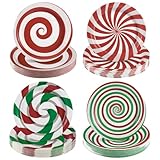
These items from Oriental Trading Company can be used for Nutcracker Ballet-themed concert and classroom decor, student crafts, and movement activities.
Nutcracker Plates, Cups, and Napkins
Nutcracker Large Backdrop for Stage & Classroom
Nutcracker Felt Craft Kits
Nutcracker Candy Stripe Tablecloth Roll
Books
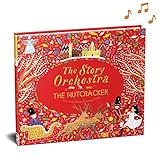
These are two of my favorite books to use in the classroom. Both are so engaging, one with the pop-up feature (on the left) and musical selections (on the right). I even bought a second copy of the pop up book because I used the original one for so many years.
At this school, students were asked to bring in a family Nutcracker and were put into this fun Nutcracker Museum display! (Remember to have the student’s name and room clearly labeled.)
Add this to your end-of-year evaluation Danielson (or similar) Domain 1b: Teacher-designed opportunities for families to share their heritages.
Nutcracker Play Along Videos
March of the Toy Soldiers-Barred & Sticks (Gr. 2-5)
Lesson Ideas
March of the Soldiers Movement Activity
Motion Terms March-in place or around room Flick-hands/fingers flick similar to flicking water on someone Wind Up Toy-arms bent (mechanical looking) and move from waist up/down like a wind up toy Scurry-fingers are like a little mouse scurrying down arm
A: March slow 8, then right hand flicks 4 times quickly from high to low, repeat on Lt side high to low, then both arms flick 7 at same time from low to high with a clap on beat 8 (repeat) B: March slow 4, wind down toy DOWN for fast 4 then UP for fast 4 (repeat) (kind of like the robot dance 🤣) A: C: Rt fingers scurry down left arm, repeat on other arm (repeat) A: B: A:
Here’s a video of the movements that I made for a newsletter subscriber while I was on vacation in Moab, Utah!