Fall Music Activities, Songs & Lessons for Elementary Classrooms

Looking for fall music activities and songs for elementary students? 🍁 This post is full of autumn-themed lesson ideas your students will love, from scarf movement and singing games to Orff-based composition activities that build creativity and musical skills.

Whether you teach kindergarten or upper elementary, these seasonal music lessons make it easy to celebrate fall in your classroom with movement, rhythm, and joyful music-making.

Elementary students moving with scarves and playing xylophones in a classroom, celebrating fall music activities.

This post may contain affiliate links. I make a small commission at no additional cost to you. Read my full disclosure.

Movement

Bring the beauty of fall into your music room with movement activities for elementary students. These easy-to-teach lessons use scarves, steady beat, and creative motion to help young learners express the sounds and feelings of autumn through music and movement.

Blowing In the Wind (K-2)

Delightful! Creative scarf movement with some lyrics suggestions for how to move.

Scarves: The silk scarves from Jacquard, 35 x 35, are the ultimate movement accessory. Pricey but worth every penny. A more affordable option, the 24 x 24 Lolakee scarves are a silk-like material, washable, and in beautiful colors.

Taking a Fall Walk (K-2)

Taking a Fall Walk uses walking, twirling, floating, and bending while highlighting downward melodic direction and tempo changes.

Scarecrow, Scarecrow (K-2)

Basic movements to a piggyback song (ABC song) about a scarecrow, that with each repeat uses a faster and faster tempo.

Autumn Leaves Are Falling Down (K-2)

I saw this fun activity on Facebook. It would be great to use if you have the parachute/fabric pieces out and want to add this quick song.

  • To the tune London Bridge: Autumn leaves are falling down, falling down, falling down. Autumn leaves are falling down, all ‘round the town.
  • The class uses a big parachute or small groups with a piece of fabric or small parachute and some leaves in the center. They step the beat as they sing and at the end they quickly raise the fabric/parachute so the leaves go flying in the air. You can also shake the parachute instead of the quick lift.

Add on verses (with accompanying parachute movement) could be:

  • Autumn winds go swishy swish
  • Autumn acorns go kerplop
  • Autumn squirrels run back and forth
  • Autumn apples go crunch crunch

Fall Orff-Based Activities

Inspire creativity and improvisation with these fall-themed Orff lessons designed for upper elementary grades. Students explore rhythm, melody, and form using engaging materials like poems, percussion, and barred instruments-perfect for hands-on fall music activities in Orff-style classrooms.

Fall Is Rizz: Composition Activity (Grades 3-5)

Learn this poem for your A SECTION
Crunchy leaves are nature’s chips,
Wind gives trees some wild hair flips.
Air turns crisp like soda fizz,
Fall just shows off—‘cause it’s rizz!

Alt ending: Air turns crisp the leaves are spinnin’,
Fall just shows off, it’s six seven.

Use the words in the below table to create a tree B section.

1234
ash, fir, beech, oak, pine, birch, elm, sprucemaple, cedar, willow, poplar, aspen, dogwood, chestnut, redwoodsycamore, hickory, sugar maple, black walnut, douglas fir, river birchyellow poplar, western hemlock, quaking aspen,

Here’s an example.

hickoryhickorymaplebirch
sycamoreaspencedarspruce

Perform it using different backing track genres! Here are Lofi, Country Honky Tonk, Reggae, and Old School Hip Hop.

Autumn Remix (Grades 3-5)

Looking for barred Orff instrument activities for your older students?

 Autumn Remix, a song with Orff arrangement, takes Emily Dickinson’s whimsical poem Autumn, giving it modern language and a pop music remix that your older students will love.

Fall music activity for elementary students using the Autumn Remix Orff song, available on TPT

The rhythms, melodies, and harmonies are what kids are used to hearing and are written in easy-to-teach formats.

Listen to Autumn Remix on TPT!

More Fall Resources

Thanksgiving Music Activities

Check out this BIG list of Thanksgiving music activities for elementary classrooms including turkey, pumpkin, and November songs and games.

Halloween Songs & Music Activities

Find Halloween songs and music activities for elementary music that engage and delight with movement, Orff arrangements, minor scales, improvisation, and more!

Spider Activities, Songs, & Crafts

Nothing says fall like SPIDERS! For swoops, glissandos, trills, and giggles, a spider does it all! Use a spider puppet for all that up and down web-building movement.

One of my favorite activities was having students make their own paper spider with a “silk thread” to show the spider moving. Vocal exploration is all a part of the movement too. Here’s the make-and-take spider craft!

Frequently Asked Questions: Fall Music Activities for Elementary Students

Q1: How can I add movement props to my fall music lessons?
A: Use scarves, parachutes, or simple props with fall-themed songs to explore beat, rhythm, and melody. Movement activities engage K–2 students, help them feel the music, and make autumn lessons hands-on and fun.

Q2: What are some fun movement activities for K–2 music students?
A: Teacher favorites include activities like Blowing in the Wind which includes easy-to-use props or music like Taking a Fall Walk that was created in a distinct form to let students show creative movement. Another favorite is Autumn Is Here by Mr. DelGaudio. (see the songs in the Movement section above)

Q3: How can I use scarves or props in fall music activities?
A: Fall is all about wind, leaves, changing temperatures, apples, harvest, and corn. Scarves and props can show downward melody (falling leaves), steady beat (Charlie Brown Great Pumpkin music), form (multi-sectioned music), and rhythm (apple poems abound!).

Q4: What are some fall-themed songs for elementary music lessons?
A: Songs like Scarecrow, Autumn Leaves Are Falling Down, and Autumn Remix work well. Choose pieces that include movement in the lyrics, rhythm patterns, or easy melodies for maximum student engagement. (see the songs in the Movement & Orff section above)

Q5: What are Orff-based activities suitable for fall?
A: Upper elementary students (grades 3–5) can explore composition, improvisation, and barred instrument performance using fall-themed poems, rhythms, or melodies. Examples include Fall Is Rizz or the Autumn Remix Orff song. Use types of apples, leaves, trees, fall colors, etc. to create lists as a basis for poems/chants. (see the songs in the Orff section above)

Q6: How can I teach rhythm, melody, and composition using fall-themed lessons?
A: Use short poems, seasonal word lists, or simple melodies to create ABA or ABAB forms. Students can perform on Orff instruments, explore improvisation, and experiment with different backing tracks like Lofi, reggae, or pop. This gives them lots of choice and connection to something that they might not ordinarily be excited about. 😉

Q7: How can I make fall music lessons creative and hands-on for students?
A: Combine movement, props, and rhythm instruments with short composition tasks. Students can create their own rhythms, melodies, or compositions inspired by autumn leaves, winds, or other fall themes.

Q8: How do I engage older students with fall music activities?
A: Have them create their own poems using word banks (trees, fall colors, or fall foods) or provide a poem and let them compose a B section. Then chant the full piece to backing tracks in genres they enjoy.

What’s Next?

I hope these fall music activities spark some fresh ideas for your classroom! 🍁

If you’d like even more lessons and free resources, sign up for my newsletter — it gives you instant access to the Subscriber Spot, a special library just for music teachers.

Written by Laura Bartolomeo, a retired K–8 music educator with 40+ years of classroom experience and creator of Oodles of Music.

AI Instrument Experiments for Elementary Music

This page will be an ongoing experiment of virtual elementary music instruments and resources that are coded using AI. If you’d like to be part of the process, leave a comment below. They all use a WordPress html block.

Virtual Instruments

Tap anywhere to activate sounds

Rhythm Sticks

Maracas

Triangle

Drum

11+ Music STEM Activities to Spark Classroom Creativity

Students creating musical instruments and engaging in STEM classroom projects for Oodles of Music blog post
Explore 11+ innovative music and STEM projects for your classroom.

Discover 11+ music STEM activities and projects from DIY guitars, theremins, coding, and more, that connect science, technology, engineering, and math to music. Ideal for general classrooms and elementary to middle school music programs.

How Can I Integrate STEM Into My Music Classroom?

It’s easier than you might think to blend science, technology, engineering, and math into music instruction.

🎸 Start with an instrument, then consider the science behind it.

🔉Or start with one of the principles of sound production and consider how to use a music activity to explore.

From sound waves to circuitry, here are twelve classroom-tested projects that show how STEM principles come alive through music.


1. Electric Strings in a STEM Magnet Program

STEM link: Compare acoustic vs. electric sound production, study amplification, and explore the technology behind modern instruments.
Try it: Add a single electric violin or pickup so students can test vibration and signal transfer.


2. Build-Your-Own Dulcimers

My students built dulcimers using kits with wooden fretboards, tuning pegs, and cardboard sound boxes. We started by looking at ratios and building pan flutes. Check out the video below!

What they need: Wood pieces, strings, tuning pegs, and simple hand tools to construct playable dulcimers.
STEM connection: Students explore ratios, vibration, and sound waves by measuring string length and tension to create specific pitches. Building the instruments reinforces concepts of fractions, resonance, and engineering design, while the music-making celebrates creativity and collaboration.
View the STEAMY Rockin’ Ratios slideshow ›


3. STEM2Strings: Electric Guitar Kits

STEM link: Woodworking, wiring, and the physics of sound meet professional-quality instrument assembly.
Classroom twist: Small groups can each build one component before final assembly.


4. Theremins Bring Joy

STEM link: Explore sound waves, frequencies, and electronic circuits with an instrument played entirely by manipulating electromagnetic fields.
Engagement idea: Connect a theremin to a spectrum analyzer so students see the frequencies they create.


5. Music and Building with 3D Printing

STEM link: Combine music performance with 3D design by printing instrument parts or custom picks.
Extension: Compare resonance of printed parts vs. wood or metal.


6. Ukuleles for a STEAM School

STEM link: Explore sound vibrations and frequency while developing fine-motor skills.
Budget tip: Add a unit on string tension to connect math ratios to pitch.


7. Percussion Meets Engineering

STEM link: Measure, cut, and assemble percussion instruments while experimenting with pitch and resonance.
Quick start: PVC pipes or tin cans become a percussion lab.


8. Coding with Electronic Drum Pads

STEM link: Connect drums to software, learning about coding, MIDI data, and digital audio production.
Student favorite: Program pads to trigger different sound effects and build a class beat.


9. Sound Science with PVC Instruments

STEM link: Investigate air columns, pitch control, and instrument design.
Fun challenge: Predict the note before cutting each pipe, then test with a tuner.


10. From Scrap to Symphony

STEM link: Sustainability meets acoustics as students engineer instruments from recycled materials.
Eco angle: Track decibel levels of different recycled materials to compare sound quality.


11. Build-Your-Own One-String Guitars

STEM link: Engineering, design, and acoustics come alive as students construct and tune their own playable instruments.
Tip: Simple wood, wire, and a tuner app keep costs low.


12. TinkerTar

This one-string instrument is PERFECT for learning about pitches and relationships with length of string and vibrations. Read all about it!

Funding Your Idea

If you’d like to bring one of these projects to life, DonorsChoose often runs STEM Innovation matches where eligible music projects receive bonus funding. Even outside of match periods, a well-written proposal with a clear STEM connection can attract donors year-round.


Key Takeaways

  • Music and STEM naturally overlap through acoustics, vibration, and resonance.
  • Instrument-building projects reinforce engineering concepts like measurement and problem-solving.
  • Technology projects introduce coding and electronics while keeping music at the center.
  • Hands-on learning ends in performance, proving that STEM concepts create real art.

Integrating STEM into music doesn’t require expensive gear or a physics degree—just curiosity, creativity, and a willingness to experiment.

How have YOU integrated STEM and music? Share in the comments below!


The Big List of Teaching Ideas for Nursery Rhymes and Songs


Looking for creative teaching ideas for nursery rhymes and songs in elementary music classes? If you’ve ever felt stuck doing the same fingerplays or songs over and over, you’re not alone.

How can we make nursery rhymes more musical, more interactive, and more developmentally rich, without spending hours in planning?

In this post, you’ll find a big list of ways to use nursery rhymes as springboards for movement, beat work, rhythm exploration, singing, storytelling, and more.

Whether you’re teaching short 20-minute classes or planning for centers, there’s something here you can plug in and use right away.

The Big List of Teaching Ideas for Nursery Rhymes and Songs Blog Cover Image

This post may contain affiliate links. I make a small commission at no additional cost to you. Read my full disclosure.


The Playlist

Why Use Nursery Rhymes in Music Class?

Nursery rhymes are packed with:

  • Repetition and rhyme
  • Simple rhythms and phrasing
  • Playful language that’s perfect for vocal exploration
  • Built-in story structures that support sequencing, improvisation, and creativity

And the best part? They’re familiar to many students already. Even when they’re not, the short length makes them easy to teach in just a few minutes.

How do we generate new teaching ideas for nursery rhymes and songs we’ve known forever?


Generate & Streamline Teaching Ideas for Nursery Rhymes and Songs With a Template

Choose a rhyme and then plug it into the below template: Introduction, Beat & Rhythm, Singing & Vocal Exploration, and Phrasing & Storytelling.

Nursery Rhymes Songs Lesson Plan Template

Grab this free template for creating multi-lesson plans for your nursery rhymes and songs!

💡 Here are more ideas about how to use this template!

Introduce the Rhyme

Introduce the rhyme by saying it for the students with lots of expression. You may want to do some echo speaking to help students learn it. Depending on the rhyme, you can add motions and body percussion. You can then go straight into Beat & Rhythm activities or save it for the next lesson as part of your multi-lesson approach.

Beat & Rhythm

Nursery rhymes are the perfect launchpad for beat & rhythm exploration. Try these ideas:

  • Echo speak the rhyme one line at a time, using natural rhythm or speech syllables
  • Keep the steady beat with body percussion (tapping legs, patting shoulders) or beanbags on knees
  • Use rhythm sticks or egg shakers to add sound and structure
  • Create a beat-passing game around the circle while saying or chanting the rhyme
  • Tap the beat while students speak the rhythm. Switch.

These activities reinforce beat vs. rhythm and help your youngest learners internalize musical timing without needing formal notation.

Singing and Vocal Exploration

These quick ideas turn simple rhymes into rich vocal exploration experiences.

  • Melody: If the nursery rhyme doesn’t have a known melody, try singing it with sol-mi or sol-mi-la.
  • Arioso moments: Invite students to make up short melodic lines using the rhyme’s text (inspired by Feierabend’s approach to spontaneous singing)
  • Character voices: Speak or sing each line using a different voice (high, low, squeaky, giant, animal)
  • Melodic direction: Choose words that suggest pitch movement (“up,” “down,” “fall,” etc.) and move your voice with the word
  • Add a vocal slide or glissando on key words for fun and expressiveness

Rhyming, Phrasing, and Story Play

Nursery rhymes are short stories in disguise. Use them to build phrasing awareness and storytelling skills.

  • Rhyming games: Pause before the rhyming word and let students fill in the blank
  • Partner phrases: Take turns speaking each phrase with a partner, then switch roles
  • Create new verses using the same rhythm or structure
  • Act out the story with puppets or stuffed animals
  • Story sequence with picture cards. Students place them in order or tell the story themselves.
  • Have students color a scene from the rhyme and retell what happened or a coloring page that already sequences the story.

All of these support memory, listening, sequencing, and creative thinking.


Nursery Rhyme Centers for Elementary Music

Prek, kindergarten, first grade, and second grade nursery rhyme centers are a great way to give students hands-on time with rhymes, especially in shorter class periods.

These ideas are a natural follow-up after experiencing the whole-class teaching above.

  • Voice choice cards: Students speak the rhyme using silly voice cards (robot, whisper, giant, mouse)
  • Rhythm center: Use rhythm sticks or drums to tap the beat or create a new rhythm for the rhyme
  • Story sequence puzzles: Give students cards to place in order (beginning, middle, end)
  • Beat maps: Students move a small object along a path as they say the rhyme, tapping the beat
  • Puppet play: Students act out the rhyme alone or in pairs using simple puppets or stuffed animals

These centers don’t require tons of prep, but they reinforce musical concepts and keep students engaged.

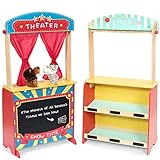
My puppet stage was loved by ALL my younger students. (older students would beg to play too) Here’s a smaller version of the one I used.

If you want to see the big stage from my classroom, check it out (and other favorite items) on my Amazon Storefront!

As an Amazon Affiliate, I make a small commission at no additional cost to you.


Nursery Rhyme Lesson Plan Examples

Here’s a quick example of how you can take one rhyme and expand it into several music-focused activities. You’ll find a full visual of this in the infographic below.

“This Old Man”

  • Introduce: Sing with motions
  • Beat & Rhythm: Play rhythm sticks on “knick knack paddy-wack”
  • Singing: Replace “man” with mouse and sing with a high voice. (elephant/low)
  • Phrasing & Storytelling: Coloring page with the ten verses

“Pease Porridge”

  • Introduce: Echo speak/clap the rhyme, discuss porridge and who eats oatmeal (hot? cold?), food likes/dislikes
  • Beat & Rhythm: Using small percussion, play the rhythm, the beat, then only on the rests.
  • Singing: Vocal exploration-speak entire rhyme in high voice then low voice then alternate phrases with high and low. Partners try different ways to use high/low speaking voices.
  • Phrasing & Storytelling: Split phrases between teacher and students, switch. Have partners explore who says the phrases.

“Miss Mary Mack”

  • Introduce: Speak with motions. Teacher speaks beginning of phrases, students say all repeated words.
  • Beat & Rhythm: Explore which repeated words use 1, 2, and 3 syllables. Play those on instruments.
  • Singing: Speak the poem but sing the repeated words on a pattern such as mrd or ds’s’ or d’d,d, or similar
  • Phrasing & Storytelling: Have students place sequence cards in order. 1. Miss Mary Mack 2. Dressed in black 3. Silver buttons, etc.
Nursery Rhyme Music Lesson Sequence Template

Final Thoughts

You don’t have to reinvent your nursery rhyme lessons from scratch. Just one rhyme can turn into five or six different experiences over multiple classes, all tied to musical concepts you’re already teaching.

Repetition is so important! When students revisit the same rhyme in different ways, it strengthens their musical memory and gives them chances to learn new elements in new ways.

Got a favorite way you use nursery rhymes in your classroom? I’d love to hear about it. Drop a comment or tag me on Instagram @oodlesofmusic to share your ideas!


Love Somebody Folk Song Lesson Plan And Orff Arrangement

This Love Somebody resource will guide you through teaching a simple Orff arrangement with choices for games, movement, body percussion, and sixteenth note rhythms for Valentine’s Day and themes of caring and kindness.

How many times do you think,
“I’d love to use this song in a concert

but it’s so short?”

A BONUS B section has been added to offer some song length and variety for concerts AND the classroom. 💖 This B section would be a super cute opportunity to hold up giant candy hearts with LOVE quotes.

Love Somebody folk song Orff arrangement image with candy hearts.

The Playlist

Continue reading “Love Somebody Folk Song Lesson Plan And Orff Arrangement”

Effective Teacher Talk in the Elementary Classroom

Here are actionable ideas and examples of effective teacher talk in the elementary classroom with direct, intentional, and engaging language for positive classroom management.

A recent social media post about training students like you do a dog reminded me of when I took our first family pet to training. As the leaders impressed upon me, it’s actually not the dog you’re training but YOURSELF! And this is SO true in teaching.

How to use effective teacher talk in the elementary classroom.

The Playlist

For New Teachers, How to Be Firm in the Classroom

New teachers often reach out for help because they try to be “firm” but nothing works.

Sometimes we need an out-of-body experience. We need to step out of the moment to think objectively, not react or overreact, and do something logical and thought out. This is hard for new teachers or when we are in new situations.

Here are a few ideas to train the teacher to be firm, backed with engaging and appropriate activities, learned the hard way by ME, and observed in other teachers in many schools over the years.

Crafting Effective Teacher Talk

The Power of Precise Communication

Effective teacher talk hinges on the power of precision. A common pitfall is the overuse of threats, which often lose their impact over time.

Don’t threaten over and over again.

They are just empty words. Actually, maybe don’t threaten, warn, or cajole at all. Instead, consider engaging activities that direct behavior.

Example: We can’t get rhythm sticks until everyone is sitting in their spot.

Replacement Action: Simply give out rhythm sticks (or pick a leader, choose who is “it”) by choosing someone sitting in their spot or doing something else that you consider appropriate. Tell the students why that person was chosen. “Here you go, James. You get sticks because I can see you are sitting down and ready to go.”

The Payoff: The class lesson doesn’t bog down, you’ve made it known that sitting in your spot is a requirement for getting an instrument, and you’ve asserted yourself as the one in charge.

The Art of Mindful Communication

I spent a LOT of time thinking about logistics and language. How I wanted them to move around the room and how I’d phrase my directions.

LESS IS MORE! Avoid falling into the trap of excessive chatter. Overexplaining can cloud directives and overwhelm students.

Example: vocal exploration. If you start out saying, “Now we’re going to echo each other…” or “Now I’m going to sing then you be my echo…blah, blah, blah” you’ve said too much.

Replacement: “My turn (point to yourself), your turn.” (point to them) and then immediately bark like a little dog (high) three times. They WILL echo. Then you follow up with “Yoo (so) Hoo (mi)” then bark like a large dog (low), then an up/down swoop, etc. Or for older kids, just start singing that new song you want them to learn.

The Payoff: Better student focus and engagement.

Communicate Through Student Choice

Empowering students and student behavior through choice is a remarkable strategy. Games like “Charlie Over the Ocean” allow leaders to select participants based on desired attributes. This approach cultivates leadership qualities while promoting desired behaviors.

Example: When playing a group “it” game, student chooses whoever they want as the next leader.

Replacement: Let students choose who is following the parameters of the activity. When playing games that have a leader, such as Charlie Over the Ocean, tell the leader to choose someone who is (whatever you want here) in their assigned spot to be the next leader. The whatever could be sitting cross-legged, singing beautifully, etc.)

Communicate With Actions

Don’t group negotiate. (similar to repeated threats)

Example: “When everyone is standing still in the circle we can play this game.”

A kindergarten class had a couple of students in a hold-hand circle who continued to yank on the arms of students next to them.

Replacement: I told those unsafe students to step back and sit down while the rest of us played the game. I also told them to watch how safe and kind everyone was to the person they held hands with. After a minute or two I asked the kids who were out if they had learned how to hold hands and they of course said yes and came back into the game.

Learn more about classroom management by checking out “Classroom Management Tips for a Successful Classroom.”

What Affects Classroom Dynamics?

You can’t discuss any part of classroom management without addressing quality and appropriate lesson planning. One size does not fit all when it comes to classroom dynamics. It’s not always just about effective teacher talk.

You can’t expect kids to be focused and engaged when you are not planning appropriate and quality learning experiences.

Example: Determine the optimal lifespan of activities for specific grade levels and classes. Flexibility is key – adapting your strategies ensures sustained engagement.

For instance, a 6-minute read-aloud may captivate one class, while a 3-minute version is better suited for another. I’ve taken a 6-minute read for a 3-minute class and paraphrased to turn those pages faster to keep their interest.

Pacing & Variety. In general, the younger grades need lots of different activities: sitting still (listening, singing), moderate (body percussion, instrument play, video play along), active movement (stepping, skipping, circle games, etc.)

Learning from Master Teachers

Throughout my career, and during transitions to different schools and challenges, I’ve actively sought out and observed exceptional educators who used effective teacher talk. These professionals possessed the knack for balancing authority and approachability. Incorporating their techniques was a deliberate process, as effective teacher talk wasn’t a skill that came naturally to me.

The True Test From the Students: She Doesn’t Play

Students often offer profound insights. When certain teachers were discussed, kids would remark, “She doesn’t play.” This resonated deeply and underscored the essence of effective teacher talk, the learning environment, and the teacher-student relationship – being genuine, caring, and staying true to one’s words.

“Say what you mean and mean what you say.”

Cheat Sheet for Effective Teacher Talk

There were times when I needed a script!

Not kidding.

As I gained experience, I got better at remaining calm and non-reactive to certain behaviors but good teacher talk did not come naturally to me.

A reactive phrase such as “What were you thinking?” doesn’t usually help.

✍🏽 So, I wrote things down that I could say in the heat of the moment.
👩🏼‍💻 I put them on a Post-It and stuck it on my computer and used them instead of what was about to come flying out of my mouth.

Teacher talk reminder phrases on post-it note stuck to a computer for classroom management ideas.

The more I did it, the more natural I became at communicating with my students.

I’ve always admired those who could get past the emotion of the moment and tune into the child.

If that’s you, what a gift!

If not, try the Post-It trick.


Join the thousands of other teachers who get timely tips, FREEBIES, and trending videos and music delivered to their inbox EVERY week! The Oodles of Music Newsletter!

The Oodles of Music Weekly Newsletter signup for Freebies and timely tips and new creator content.

Processing…
Success! Use the PW: MUSIC4LIFE to unlock FREEBIES on the Subscriber Spot tab in the top menu!

How to Teach Students to Play Barred Instruments

Are you ready for your kids to have an Orff experience and play instruments but don’t know where to begin? Learn techniques that give kids instant success playing barred instruments in your music classroom.

Using clear terminology and introducing techniques as you play, students will be creating and improvising almost immediately.

The Playlist

How to Play Barred Instruments

How to Teach With Barred Instruments-Day 1

The below video details techniques I found worked very well in my teaching. You may find tips that you can apply or modify for your students.

Fun & Simple Barred Instrument Exercise

Mr. Trevino posted this video and it’s a GREAT example of creating playing opportunities that aren’t songs.

Objectives here would be:

  • Understanding scales
  • Correctly echoing rhythm patterns
  • Mallet technique (alternating hands)

How to play: Mr. Trevino speaks the rhythm pattern on C and students echo play it. C-CCCCC- Then he moves on to D, etc.

Extension: This would make a GREAT center! In groups of 4 for example, one student is the teacher calling out the letters and patterns and the other 3 play. Rotate who is the teacher.


Check It Out!
🎯 This easy-to-use digital tool lets you design and download barred instrument visuals for your elementary music classroom. FREE!

Steps to Playing Barred Instruments

Below are the points I made in the video. The video is great to see it in action.

Getting Started

  • I turn my instrument so that my low end and their low end are the same direction in the room.
  • I use room references (window wall, door wall) instead of left and right.
  • Echo speak in 4-beat phrases.
  • Explore the low and high sides of the instrument.
  • Use terms such as long/low/big and short/high/little
  • Use the note name C and also introduce the octave C in the middle
  • Use one hand or both hands randomly. Let students do what is natural for them.
  • Begin to combine echo patterns that use both high/low/middle references.

Stepwise Movement Using Letter Names

  • Reminders not to PLAY on the letter names if they are located on the end of the bar.
  • Give them PRACTICE TIME.

Essential Agreements for Barred Instruments

An essential agreement in my room was to Sing, Play, and Speak Beautifully. For students who want to purposefully make noise (smack, hit, overly loud), reminders of this agreement should take care of it. Some kids have motor control issues and this is NOT for them. They are trying! Give them a mallet that creates less sound.

Playing Techniques on Barred Instruments

  • Not a baseball wind-up but a good basketball dribble bounce.
  • A nice low bounce that lets the bar ring.
  • Wrap your fingers gently around the handles. Pointer/index finger should not be straight but curved too.

🔷 If you’re ready for some FREE Orff-inspired resources, check out the Oodles Weekly Newsletter. It’s full of teacher tips & tricks as well as a Subscriber Spot full of FREE resources.

Let’s Play Rhymes

Choose any short poem or rhyme. Starting on low C, play the rhythm stepwise up and down the instrument. Use one hand at a time (just right then just left), then try with two, alternating hands.

  • Play in different directions.
  • Play in pentatonic
  • Improvise or take time for them to create a way to play.
  • Easy to switch partners if you don’t have a 1-to-1 instrument situation

Create Form & Arrangements on the Barred Instruments

Form: woods, metals, tutti or soprano, alto, tutti or solo, tutti, solo, tutti (for example)

Do a Round Robin

Every student improvises, one after the other. T can play a broken bordun to accompany.

Orff Resources

AOSA (American Orff Schulwerk Association)

AOSA offers Levels (summertime PD) as well as regional weekend workshops. The workshops are a fabulous way to get introduced to all things Orff approach as well as get new ideas for those who are already familiar with Orff Schulwerk.

Orff Arrangements Ready to Teach

Here are a couple of my TPT best-selling Orff multi-lesson resources that are ready to teach and guide you through the process.

A Song of Peace Orff Arrangement Resource Cover Image
A Song of Peace Orff Arrangement Resource Cover Image 2
I Love the Mountains Orff Arrangement Resource Cover Image
I Love the Mountains Orff Arrangement Resource Cover Image2

Final Thoughts

Lots of my blog posts, videos, and resources come directly from interaction with teachers like YOU!

Ask a question, leave a comment, share a tip in the comments below!

❤️ It helps all of us in the music teaching community!

The Oodles of Music Subscriber Newsletter

The newsletter offers weekly updates on everything from

  • new ukulele play alongs
  • classroom management
  • the latest YouTube videos for your classroom
  • new additions to the song, winter, and video databases (CONCERTS!!!)
  • TpT resources

And Freebies

When you sign up, the confirmation message will have the password for the free resources available by clicking on the heading at the top of the blog, “Subscriber Spot.”

I try to add a new resource to the Freebies every month!

Sign up HERE

Processing…
Success! Use the PW: MUSIC4LIFE to unlock FREEBIES on the Subscriber Spot tab in the top menu!

A My Name is Alice – Popular Books, Activities, and Music

Blank Booklets to Create Your Own Verses

This TpT resource includes

  • a presentation with mp3s to learn the song
  • a simple Orff arrangement for xylophone, glockenspiel, and guiro
  • a booklet template for students to create their own verses
Lyric Writing Booklet for A My Name Is Alice Jump Rope Chant and Song
Continue reading “A My Name is Alice – Popular Books, Activities, and Music”

Sing & Move Day Amazing Video Playlist

Need quick & easy elementary music plans? The Sing & Move Day video playlist is perfect for no prep lessons, brain breaks, or subs!

Get your kids moving & grooving with a series of videos alternating singing videos with moving videos.

Sing & Move Day Blog image of singing and moving videos for elementary music

This post may contain affiliate links. I make a small commission at no additional cost to you. Read my full disclosure.

How the Page Is Arranged

  • The videos alternate between sit-down SINGING videos and get up and MOVE videos.
    • Pick and choose the videos that are most appropriate for your students.
    • Some videos are more K-2 and some more 3-5!
    • Scroll past the ones that don’t work and head for something you know your kids will love!

Disclaimer: You should preview any video before showing it to your students.

List of Sing & Move Videos (A Growing Playlist)

  • Sing: No Place Like Home (Wicked: For Good), Girl in the Bubble (Wicked For Good), Zoo (Zootopia 2), Golden (Demon Hunters), Takedown (Demon Hunters), What Is This Feeling? (Wicked), Popular (Wicked), Believe (from Moana 2), Nursery Rhymes Done Right (BlackMediaPresents), Sky Full of Stars (Sing 2), Steal the Show (Elemental), Part of Your World (Little Mermaid), The Wish (Disney Wish), All of You (Encanto), See You Again (Charlie Puth), Happier (Marshmellow), Don’t Give Up On Me (Andy Grammer), See You Again (Wiz Khalifa), How Far I’ll Go (Moana), Can’t Stop the Feeling (Trolls), Into the Unknown (Frozen), Surface Pressure, Golden & Takedown (KPop Demon Hunters)
  • Move: One Short Day Body Percussion (Wicked), Thick of It by KSI (body percussion), Uptown Funk Body Percussion, Boom, Snap, Clap (Kinderlieder), Go Bananas (Prek-1), Shake It Off (Kidzbop), Gross Motor Freeze Dance, DJ Raphi Old MacDonald, Waka Waka, Cheerleader, Levitating, Mario Freeze Dance (Coach Corey Martin), Dance Monkey, Ghostbusters, Bruno (Encanto), My Own Drum (Vivo), DJ Raphi Follow the Leader, High Hopes, Happy, Move to Jazz, Silent Movement (Mr. DelGaudio), Move to Beat/No Beat, We Will Rock You (body percussion)

No Place Like Home (Wicked: For Good)

One Short Day-Body Percussion (Wicked)

Girl in the Bubble (Wicked: For Good)

Zoo (Zootopia 2)

Golden (KPop Demon Hunters)

Jam Session Primary Song Medley

Takedown (KPop Demon Hunters)

What Is This Feeling? (Wicked)

Thick of It by KSI (Body Percussion)

Believe (from Moana 2)

Uptown Funk Body Percussion

Nursery Rhymes Done Right

Boom, Snap, Clap Body Percussion

Steal the Show from Elemental

Shake It Off Dance

Read First With Golden Books!

Golden Books to add a reading connection to your music activities!

Part of Your World from The Little Mermaid

Freeze Dance

This Wish from “Wish”

Bananas

Old MacDonald

All of You from Encanto

Waka Waka Dance

  • If you aren’t sitting in chairs/stools, tap foot on ground or stand up and step in place.
  • Kids could pedal a pretend personal bicycle at 2:19 where players as a group create the bike.

See You Again by Charlie Puth & Wiz Khalifa

We Will Rock You Body Percussion

Cheerleader Dance

Moving to Jazz Creative Movement

Happier by Marshmello

Levitating Dance

Mario Freeze Dance

Don’t Give Up On Me by Andy Grammer & PS22 Chorus

Moving to Beat & No Beat

Dance Monkey Body Percussion

See You Again by PS22 Chorus & Isaiah G

The Clown, Movement by Mr. DelGaudio

How Far I’ll Go from Moana

Ghostbusters Dance

Can’t Stop the Feeling from Trolls

My Own Drum Dance

Follow the Leader Dance

High Hopes Dance

Into the Unknown from Frozen

Happy Dance

Surface Pressure from Encanto