I’m Laura Bartolomeo, an elementary music educator with 40 years of public school teaching experience. Music, movement, and play are at the heart of my educator life, whether I’m creating Orff arrangements, sharing tips about elementary music, or creating resources for Oodles of Music. Outside the classroom, I'm a mom, wife, teacher, reader, gardener, trekkie, sci-fi fanatic, musician, dog lover, and a Christian. I hope my contributions bring some joy and happiness to your life!
Originally published April 19, 2024 Latest Update April 18, 2026
Find easy no/low prep Earth Day music activities, songs, and games for elementary classrooms using rhythm, movement, and singing!
What’s the history of Earth Day?
According to Earthday.org, “…founders created and organized the very first Earth Day on April 22, 1970. Since then, (it) has been mobilizing over 1 billion people annually on Earth Day, and every other day, to protect the planet.”
Originally published April 3, 2024 Latest Update April 3, 2026
Learn about jazz with these EASY jazz music lessons & activities using instruments, singing, movement, and creating. Perfect for K-8 elementary music.
Jazz is perfect all year long but can be a special emphasis in February for Black History Month, March for Women’s History Month, or April for Jazz History Month.
Table of Contents
This post may contain affiliate links. I make a small commission at no additional cost to you. Read my full disclosure.
Music educators generally teach a wide variety of grade levels and a common challenge is engaging older students. Let’s look at how we can have better engagement in elementary music using small group music projects.
The Playlist
We’ll start with the reasoning behind small groups and their effectiveness. Then on to how to set them up. Or skip straight to the lesson plans to see if they will work for you.
The Challenge & the Solution
Music Schedules & Perceptions
Unlike a homeroom/classroom, music classes meet relatively infrequently so building relationships and trust with students takes more time.
Students often consider special area classes a “break” from the rigors of their other classes which can make engagement and classroom management more challenging, especially for grades 4-8.
“This is boring.” “My fingers hurt.” You often hear students new to the ukulele relay their frustrations about learning the instrument. Getting away from direct instruction and using easy Orff ideas for your ukulele curriculum is a great way to re-engage your students when they hit a plateau in their ukulele learning journey.
Or, add an Orff approach all along to prevent burnout in the first place.
Let’s add movement and speech to our curriculum along with play, imitation, improvisation, and experimentation.
Originally published March 10, 2024 Latest Update April 3, 2026
A lunar or solar eclipse is a great time in elementary music to integrate music and science. Here are a variety of eclipse and sun, moon, and Earth music activities for kids K-6.
Table of Contents
What is a lunar and solar eclipse?
A solar eclipse occurs when the moon appears in between the sun and the earth, blocking the sun’s light.
A lunar eclipse occurs when the earth appears in between the sun and the moon, casting a shadow on the moon.
A solar eclipse takes place during the day time, when there is a new moon. A lunar eclipse takes place during the night, when there is a full moon.
How Many Eclipses Occur Each Year Worldwide?
According to timeanddate, most years have 4 with a maximum (rare) of 7! Eclipses are happening worldwide all the time! Let’s look into the future!
Eclipses & Super Moons Worldwide
Notable eclipses for North America: March 3, 2026 — Total Lunar Eclipse August 12, 2026 — Total Solar Eclipse June 26, 2029 — Total Lunar Eclipse August 28, 2026 — Partial Lunar Eclipse January 14, 2029 — Partial Solar Eclipse
Solar Eclipse Vocabulary Total-the moon completely covers the face of the sun. Partial-the Moon comes between the Sun and Earth, but the Moon only partially covers the Sun’s disk. Annular-the Moon covers the Sun’s center, leaving the Sun’s visible outer edges to form a “ring of fire” or annulus around the Moon.
Lunar Eclipse Vocabulary Total-the Earth comes between the Sun and the Moon and its shadow covers the Moon. Eclipse watchers can see the Moon turn red when the eclipse reaches totality. Partial-the Earth moves between the Sun and the Full Moon, but they are not precisely aligned. Only part of the Moon’s visible surface moves into the dark part of the Earth’s shadow. Penumbral-when the Moon moves through the faint, outer part of Earth’s shadow, the penumbra. This type of eclipse is not as dramatic as other types of lunar eclipses and is often mistaken for a regular Full Moon.
The Artemis II mission is officially underway, marking the first time in over 50 years that humans have returned to lunar orbit. This “Artemis Generation” of students is witness to history, making it the perfect time to bring space exploration into the music room. By connecting the science of the SLS rocket and the Orion spacecraft to rhythm, movement, and soundscapes, we can create a truly interdisciplinary STEAM experience.
Flying to the Moon Sing-a-long
Looking for a high-energy way to get your students excited about the Moon and the NASA Artemis missions? My newest video, Flying to the Moon, is the perfect addition to your space-themed lesson plans!
This sing-along is designed for K-5 students and features:
Active Imagination: Students “launch” into space and walk on the Moon.
Musical Exploration: Use it for rhythmic ostinati or simple movement patterns (perfect for a brain break!).
Science Integration: Great for connecting music to your science units on the lunar cycle and space exploration.
🎁 Bonus: I’m also offering the accompaniment mp3 for FREE! Just head over to the Freebies post to grab your copy and start singing in your classroom today.
Space-Themed Music Lessons & Resources
Artemis “Moon Shadow” Movement: Use the Moonshadow by Cat Stevens activity to teach students about rotation and orbit. Have one student act as the “Earth,” another as the “Artemis Capsule,” and a third as the “Moon” to visualize the mission’s trajectory.
Star Wars Movement: Take your “Artemis Generation” students on a journey to a galaxy far, far away with this Star Wars Movement Activity. Perfect for grades 3-6, this lesson uses body percussion to help students internalize musical form. It’s a high-engagement way to practice rhythmic precision while celebrating one of the most iconic “space” scores in cinematic history.
The Moon’s On Fire Read Aloud: Ignite your students’ curiosity about lunar cycles and glowing night skies with The Moon’s On Fire. This rhythmic read-aloud is perfect for K-1 and serves as a whimsical introduction to the Moon’s “phases” as your students follow along with the Artemis II crew’s journey. Use it to practice steady beat or as a creative springboard for simple vocal explorations.
Starry, Starry Night: Bring a sense of peace and wonder to your classroom with Starry, Starry Night. This original song and versatile resource is designed for grades 2-5 and features a beautiful Orff arrangement that includes parts for:
Barred Instruments: xylophone, glockenspiel, finger cymbals (triangle), ukulele C chord only (opt), recorder A, G, E (opt)
Percussion: Finger Cymbals to add that “twinkle” effect.
Vocal Explorations: Engaging echo-singing and melody practice.
Bonus Movement: A high-energy “Meteor” parachute game that perfect for getting the wiggles out while reinforcing musical form.
Whether you are looking for a calming winter concert piece or an interdisciplinary lesson to pair with a science unit on the moon and stars, this low-prep resource provides everything you need—from a lesson plan timeline to sheet music and play-along videos. Read more about Starry, Starry Night on TPT.
Watch the “Starry Night” song & Orff arrangement preview for elementary music classrooms.
Star Light Star Bright-This resource will give you the classic learning for sol-mi and quarters, barred eighth notes PLUS the hard-to-find opportunity for your younger students to play barred instruments in a meaningful way. The Orff arrangement includes a simple bordun and then a B section super-simple poem that becomes an instrumental section. Use this multi-lesson low/no prep format in either Google Slides or PowerPoint. Read more about Star Light Star Bright on TPT.
Space-Themed Merch
Astronaut Projection
It’s the perfect time to pull out the black lights, twinkle lights, and all your spacial goodies!
Originally published February 22, 2024 Latest Update September 29, 2026 Written by Laura Bartolomeo
Check out this BIG list (with step-by-step instructions) of elementary music games for kids of all ages including your hard-to-please older students. The games use beat, rhythm, singing, and music vocabulary and include out games, competitions, performing, and challenges, many of them NO PREP! For even more games, try name games too!
This post may contain affiliate links. I make a small commission at no additional cost to you. Read my full disclosure.
What are the best ways to engage students? Why games?
Classroom games are a great way to build collaboration and community and practice important skills.
Here are the newest music games added to our BIG list of elementary music activities!
TEAM UP! Music Concept Matching Game (Grades 3-5)
Team Up is an engaging music game where students find their “team” by matching connected music concepts. For example, each student gets a card, such as the treble clef note G, “line 2,” or “the note between F and A,” and moves around the room to find the classmates whose cards go with theirs.
It’s a fun way to practice note names, rhythm, solfege and other music elements while building collaboration, communication, and teamwork skills. Just print, cut, and play. It works great as a warm-up, review activity, or sub-plan favorite for grades 2-6.
2 smaller balls such as Nerf, small playground balls
Slide display of your color hoops with a different rhythm inside each one
Teams of 2-4
❤️ ADAPT IT: A teacher commented with a GENIUS idea. Instead of rhythms, use RECORDER notes, UKULELE chords, and similar! 🔥
Instructions
Team 1 and 2 are both rolling balls at the hoops
If the ball stops inside a hoop, that player may go get the hoop and bring it to their team area.
If the ball stops outside a hoop, the team member gets the ball and brings it back to the next roller.
When a team gets 4 hoops of any color, they line them up in any order and use the rhythms displayed on the screen/board to create a “beat.”
The first group to perform their rhythm correctly gets a point.
Play best out of 3 or first to 3 or similar.
Meter BEAT Tag VIDEO Editions (K-5)
Teachers! Combine beat and meter practice with a fun tag game to engage all students K-5.
Objective: a tag game where “it” tries to tag players to get them out as the players try to stay away from “it”
🌠 What’s different? You can play Meter Tag with a teacher drum beat, metronome, or song, but this video example gives a guided CRUNCH on beat one for a visual and auditory cue that doesn’t distract.
📌 Grades 2-5 Lesson Plan
Clap/pat the downbeat in this 4/4 pattern song. The “crunch” helps guide the experience.
Play the tag game: “It” and others may only move on beat 1. For classes with large numbers, maybe play in 2-3 rounds with those who don’t get caught, get to be in the “final.”
📌 Grades K-1 Lesson Plan
Clap/pat the downbeat in this 4/4 pattern song. The “crunch” helps guide the experience.
Play with a small group while the rest continue to pat/clap beat 1 crunches. Keeping the tag group small allows you/them to monitor that students are only moving on the downbeat.
Bongo Madness Check out the video description for great teaching ideas K-5!
Rhythm Soccer (Football) World Cup! (Grades 2-5)
Keep the excitement of the World Cup going with this Rhythm Soccer game! Teachers, your students will love the competitive rush of getting the rhythm perfectly correct so they can earn their chance to shoot and score a goal. Inspired by the massive excitement of the World Cup, this play-along is designed to keep every student locked in, active, and practicing their music reading skills without even realizing they’re learning.
📌 Scoring Ideas for Football/Soccer Check out the first slides for ideas how to safely shoot on goal in class.
🎯 Using just quarter notes/rests and barred eighths, challenge your older students to repeat the 4 beat pattern a couple of times to win the right to shoot.
📌 Great for elementary music teachers looking for an engaging, low-prep rhythm reading activity or an exciting reward game.
📌 And groove to the Nessun Dorma remix at halftime! 🥹
Who’s #1 (Grades K-5)
Who’s #1 will have your students feeling the steady beat and counting each measure with the goal of always jumping on 1. Playing in teams, they’ll use instant collaboration to keep each other steady and moving in sync.
How to Play
Use small hoops (2 to a player) or large hoops (1 to a player)
Set the hoops up in a circle. (see image)
Get in teams of 4-6
Start the music and teacher gets everyone started at the same time.
You can only jump in and out of the circle on beat 1.
After the music plays for a while, the teacher stops the class and determines which teams are in the correct position. e.g. if you started jumping on measure 8 (jumping in) and stopped on measure 16, you should be IN the hoops not out. If you stop on measure 17, you should be OUT, etc.
If a team is not in the correct position, they are out. Play until there is a winning team.
Variations for Basic or Advanced Play 📌 For more BASIC play, don’t play as an elimination game. Give points to the teams that are in the correct position, but no one is out. The team with the most points “wins.” This keeps everyone jumping and practicing. 📌 For more advanced play 1. Change the tempo by using faster, slower, or changing tempo! SO fun! 2. Using meter in 4, have teams jump on 1 and 3. 3. Using less common meters such as 3/4, 6/8, or 5/4.
Musical Tapple With 15+ Categories (Grades 3-6)
A fast-paced word game where players race against a 10-second timer to name items in specific categories. All you have to do is switch the game cards for music category cards. Play as a class, in smaller groups, or in centers. Choose the full-size Tapple game or smaller Tapple mini. (aff. link)
This African-American playground game has lots of movement and the opportunity to create new verses.
“With its jazzy beat, Head and Shoulder appears to be a fairly modern game. Although as Mrs. Jones points out, it requires good coordination.” (Step It Down, 1972)
How to Play In double circle formation, act out the first phrase, then-
“baby” clap your hands
“one” tap partners right hand,
rest-clap
“two” tap partner’s left hand
rest-clap
“three” tap both partner’s hands
The craziness begins in measures 5-6 when you need to repeat the action THREE times. (verse 8 “change your partner” is SO fun)
BIG TIP: ALWAYS clap every time you sing “BABY!”
Adaptations 🔹Let partners make up new verses and share with the class. Keep your favorites to become part of your “regularly” sung verses. 🔹It can be modernized using popular actions such as, “Shoot a three” or “Do the (popular dance move).”
🎯 Game Resources Quick List
Great games often require ZERO resources, just a song and the game! Occasionally a prop will come in really handy! Here are some of my favorites!
Sensory lightweight balls for ball-passing games!
The colorful stringy ball has a rubbery feel and the plush ball feels soft and cushy. These are from Amazon but I’ve found similar items seasonally at grocery stores and Walmart.
What type of games work for a wide range of grade levels like K-6? To work for a wide range of grade levels, elementary music games must balance universal appeal with ease of learning. The best activities are simple enough for younger students to grasp quickly while remaining engaging for “harder-to-please” older students. Effective examples often include call-and-response songs, adjustable rhythm challenges, and games that emphasize teamwork and collaboration.
Around the World (K-5)
One of my students’ FAVORITE from all of our elementary music games! And SO simple.
How to Play Around the World
Choose a starting student to stand behind another seated student.
Show/Play a prompt (e.g., instrument image, rhythm pattern, note name).
The two students compete to answer first.
The student who answers correctly first wins the round.
The winner moves to the next student and faces a new challenge.
Play continues as the winner tries to go “around the world” (around the class).
If a seated student wins, they take the place of the standing student and continue.
Small Percussion
Identify instruments by sight or sound! 👀 VISUAL-hold up the instrument. I used a big shopping bag and lifted the instruments out of the bag. (maracas, finger cymbals, drum, rhythm sticks, etc.) 👂🏼AURAL-using something to screen/hide the instrument, play it. I had the shopping bag but also a bass xylophone or similar so that I could pull the instrument out of the bag and play it without it being seen.
The Telephone Song (K-5)
With its call and response style, this song is great for hearing individual voices while giving students a chance to choose who they call, all with the fun non-sensical “rick tick tickety tick” lyrics.
Audience Participation Song If you’re looking for a fun audience participation activity, use The Telephone Song. I started it with, “Hey 4th grade,” then when they became the leader on the repeat, they sang, “Hey Mrs. Taylor,” their teacher, who then sang, “Hey audience.” By that time, they had the hang of it and knew what to do. When it was time to name the next person, “If it isn’t ???,” I pointed to the principal so they’d all know who to name. The principal who sang it back to me. There are so many possibilities with plants in the audience to keep it going however long you want it to go.
Match Game: Similar to 4 Corners (K-5)
A 4th grade teacher on TikTok says her kids love this game! It’s an elimination game like 4 Corners. Music teachers could use it as a brain break.
Animal Matching Game
Students choose 4 animals and the motion, gesture that will go with it. (pant for dog, pound chest for gorilla, etc.)
All students line up on one side of the room and teacher is on the opposite side.
Teacher turns back to students and on count of 3, teacher turns around with an animal’s motion.
Anybody with the same animal motion is out.
⭐️ Letting the KIDS choose the 4 elements and the motion/gesture creates the best learning opportunity.
How to take it from a brain break to something musical?
Musical Symbol Match-Make the shape of a treble clef, quarter rest, whole note, or quarter note.
Solfege Match-choose 4 notes to sign, make them obviously different such as low do, high do, sol and fa.
Instrument Match-do the motion of an instrument such as violin, drum, recorder, triangle.
Quiet Sound Obstacle Course Challenge (K-5)
This quiet-yet-engaging activity (for indoors or out) will become a student favorite!
Great for
building listening and communication skills
quiet testing time
teamwork
something a little different to end the year/grading period
How to Play
Create a curvy obstacle course using pool noodles or painter’s tape.
Add “hazards” like bean bags, beat buddies, and paper plates with coins along the path.
Students sit around the course in teams of 3–4.
Objective:
A blindfolded teammate navigates the course using only instrument cues—no talking allowed trying to get to the end of the course with the most points!
Instruments as Commands: (done by your teammates) Use quiet sounds especially during testing.
Egg shaker = Turn left
Maracas = Turn right
Fingernails on a drum = Move forward
Sleigh bells = Stop
Game Play:
Each team gets 5 minutes to complete (or get as far as possible) through the course.
Start with 100 points. Deduct or add based on the following:
Touching the wall = -10 pts
Stepping on a hazard = -5 pts
Collecting a coin from paper plate = +5 pts
Talking = -2 pts (even if it’s not their turn)
Rhythm Basketball (Grades K-5)
Get in the game with Rhythm Basketball! 🎶 This interactive music class activity combines rhythm reading, teamwork, and body percussion movement, perfect for March Madness season! Use the video or create your own rhythms on a Smartboard.
How It Works:
Students clap the rhythm (quarter notes, rests, eighth note pairs)
At halftime, the whole class joins in for a body percussion halftime show to a funky beat!
This is such an easy game to make NO PREP! Rhythms-use the video below or flash cards you already have, write them on the board on the spot, or best yet…let students write them for the opposing team! Hoop & Basketball-use a trash can and a wad of paper! 3 Points!
*shoot a basket using an indoor mini (to the right), or a simple trashcan and ball or wad of paper will work, or NO shooting at all-just a point for the correct rhythm.
This song and game goes back to a version from the Carolinas and Georgia area sometimes called “Just from the Kitchen.” There are several games associated with it.
Broad Jump-2 or 3 students stand on a line. Whoever jumps the furthest (flat footed jump that they stick) stays in for round 2. Continue the first elimination and go to round 2, etc. until you have a winner.
When to jump:
Jump at the end of the song as you say, “Ready, jump.”
Jump on the word “jump.”
Using 3 at a time, person 1 jumps on the first “chooleeloo” person 2 jumps on the 2nd, and person 3 jumps on the 3rd.
Elimination Game Ideas These ideas for those eliminated are SO fun with LOTS of musical learning!
ABCya FREE Online Games (K-5)
ABCya is a K-6 game site and part of the IXL family of companies along with TPT (Teachers Pay Teachers), Rosetta Stone and more! Here’s how I use it for music.
Search using “MUSIC” and you’ll find a variety of games and printables. Some seasonal games offer a musical element too.
(Affiliate Link)
My favorite game is SOUND BURST! The keyboard letters all have different sounds and the space bar sets the mood and changes the sound bank. Create fun patterns!
A great class starter or ender!
I Let Her Go Go (Grades 2-6)
I used this song SO MANY TIMES! Kids love it. You can do it with mixed grade levels. It’s great for adult/kid combos. It’s just THE BEST! I played it on the piano but it can easily be unaccompanied as well.
Here’s a favorite singing game perfect for all grades kindergarten through fifth grade. It’s called I Let Her Go Go. It’s easy to accompany on piano or ukulele but great also sung unaccompanied so a really fun game to play outside. I have the game and music on oodles of music. Comment below if you’d like for me to leave you the link. #creatorsearchinsights#singinggame#ElementaryMusicTeacher#ElementaryMusicTeachers#musicteachersoftiktok
Use this song & activity in a wide variety of settings!
classroom
for older/younger groups
Special Person’s Day or Grandparent’s Day
mixed grades such as 1st & 5th
mixed classrooms such as regular and sped
outside
Drum Tag (Grades 2-6)
You need some open space to play this game. The musical objective is moving and anticipating patterns and rhythms.
Object of the Music Game: To be the last person to get tagged.
Equipment: One drum.
How to Play
Drummer plays patterns or a beat and everyone else is allowed to take one step for every drum beat, trying to tag others and not get tagged yourself.
If you get tagged you sit out.
However, both sit out if two students tag each other at the same time.
If you take extra steps, you are out.
If you are the last one standing, you get to be the new drummer.
Variations Strategies FAQs
Teacher may want to always be the first drummer to set a standard for playing. A slow steady beat with some pauses would create some time for strategies. An ostinato with some pauses (quarter, two eighths, quarter, rest) would be interesting too. Lots of possibilities.
We Are Dancing In the Forest (Grades 2-?)
My students BEGGED to play this game all the time.
I couldn’t place an upper grade level suggestion on this one. I can see older kids playing but you know, it just depends… The amount of engagement of elementary music games is hard to predict sometimes.
Musically you have quarter notes/rests and eighth note pairs and mi so la.
Object of the Music Game
To not let the wolf see you move!
Equipment
None
Preparation
Learn the song
Play
Wolf turns/goes to the corner so they can’t see the rest of the students. Students sing and dance around the room, freezing at the end when the wolf is allowed to turn around.
Wolf calls out anyone they see moving. My rule was, “The wolf is always right!” so if they said they saw you, get out. I sat in the opposite corner of the room so I could see everyone and had those who got out come sit on the floor by me. (“Idle hands are the devil’s playground.” Professor Harold Hill, The Music Man) 😆
Those who are out remain out as long as you decide. (a couple of plays or back in immediately is up to you) Everyone wants to be the wolf so making them stay out a round or two prevents students from moving carelessly. If you aren’t in the game, you can’t be picked to be the wolf!
When the wolf’s time is up, they pick a new wolf to begin the game again. It’s one of those elementary music games that kids will play over and over again.
Variations Strategies FAQs
Additional rules you might need to create based on these actions: -Students may want to move when the wolf turns their back and get very close to them. -Some will get very near the wolf’s corner during the song. -Students may try to go under items in your room. (tables, chairs, etc.)
Roll Call (Grades 2-5)
Using a roll call (like an Army cadence) with a timing competition thrown in is a quick trick to get older students to sing.
How To Play Music Meter Beat Tag is just like regular tag with the tagger who is “it” trying to tag out the players! In this musical version, the tagger and players may only move on the downbeat.
You are out if you get tagged or move on any beat other than the downbeat. Last player left is the winner! Elimination games take a while to play but are popular elementary music games for older students.
Other options: Start with 2 taggers instead of one.
Music & Beat Options & Ideas
Use a frame drum and mallet and hit the drum on beat one and the wooden frame on the other beats. You can choose between 3/4 and 4/4.
Prepare students by sitting and clapping the downbeats, then stepping the downbeats with no taggers, then finally trying the game.
Choose a moderate tempo so that the downbeats aren’t too far apart or too close together.
Try recorded music with strong downbeats. You could still tap the drum or a claves on the downbeat to help students stay on track.
Beat-Passing Games (Grades 1-5)
These ideas are for passing a SINGLE object around the circle, not cup passing games and similar where EVERYONE has an object. Many elimination games are played using a single object.
I love to take general ed classroom ideas and modify for the music room. Originally called Buzz for a spelling game, I’m calling this music version Beep!
Musical Objectives: practice rhythm patterns, beat, meter (a great way to introduce 3/4 or 5/4 meter)
Object of the Game: To be the last one standing.
How to Play
Give the class a rhythm pattern. Starting at one point in the circle, use an object to pass around as each student is in charge of speaking a single note. (ta ta ti ti ta) This pattern would involve 5 students. The next student, #6, says BEEP and is out. Continue until you have one person left who is the winner.
Other options
K-1: Continue with the same pattern round and round.
2-3: Each student is in charge of a BEAT not a note so (ta ta ti ti ta) would involve 4 students and the 5th one would be out.
4-5: Change patterns continuously. Have a stack of patterns and change it after each pattern.
Here’s a ridiculous example of how to play it!
CONNECTIONS (Grades K-5)
Make your own Connections elementary music games similar to the popular one from the New York Times! Click on an image to play one of the games that I made!
Tic-Tac-Toe (Grades K-5)
There are so many learning opportunities for multiple grade levels for this Tic-Tac-Toe music-themed game played on the floor. All you need is painters tape and musical cards for the players.
Resources for the Game The painters tape can go directly on your floor or carpet but what about making permanent boards using foam or poster board? After making them you’d have a virtually no prep activity. A 2′ x 2′ grid would need about 8′ of tape.
This tape is about 1″ x 60 yards. Rounding up, let’s go with 9’/3 yards for every grid so this roll would make 20 grids.
On an 8.5 x 11 sheet of paper, 4 game cards would each be 4.25″ x 5.5″. Making them in Canva would be a breeze with your access to so many images. Laminate for lots of use. You could also use index cards and hand write rhythms/pitches. Quick, easy, cheap, and durable.
Applications If you want this to be a whole-class activity, you could put 4 to a grid and let them alternate playing 2 and 2. Game play could be the best out of three games. The winner of Pair #1 could play the winner of Pair #2 for a grand champion winner.
If you play 4 to a grid, a class of 28 would need 7 grids. Grid game pieces could be the same or represent wider learning. For example, K-2 could play Percussion Instruments and rotate around the 7 grids. The grids could represent
shakers (eggs shakers/maracas and tambourine/shekere)
scrapers (guiro/sand blocks)
skins (drum/tambourine)
metals (triangles/finger cymbals)
woods (wood blocks, claves)
Use whatever the overarching learning/terminology is that represents what you want your students to know.
🔴 (Pre) Kindergarten-Grade 2 Elementary Music Games
What are the best music games for PreK, kindergarten, 1st, and 2nd grade? For younger students in elementary, music games should balance engaging, fun gameplay with clear teachable elements like singing, rhythm, steady beat, and creative expression. The “fun factor” often comes from silly subject matter, challenges, and chasing games, while the instructional value is found in the repetition and movement that helps early learners internalize musical concepts.
All Around the Buttercup (Prek-2)
Students are in scattered seated positions around the room and leader weaves randomly around the room choosing the next leader at the end of the song. This scattered position format allows the long line to have more room to move. Leaders need to move SLOWLY or the end of the line gets whipped around. ☺
Alternate Play: Have TWO leaders begin the game creating two SEPARATE lines. The only rule is that the leader cannot let their line break into the other line. This of course allows everyone to get chosen quicker.
Hints: Leaders need to move slowly. If someone holds their hand out or points to pick you, it is impolite to not accept. Game 2 version doesn’t require hand holding. Try to impress upon the class that there should be no stopping between repeats of the song. Students should lead the entire game and teacher should not have to sing.
Ready to add Orff instruments to Buttercup?
This game (and an extension) is included in my “All Around the Buttercup Song With Orff Arrangement and So Mi Re Do Learning” guided learning resource.
Delightful additive game shared by Vicky Suárez who learned it from Peggy Bennett.
Setup: Students are seated in a circle with room to walk around the outside.
Song: To the tune of London Bridge– “We are going to the grocery store, the grocery store, the grocery store. We are going to the grocery store to buy some groceries.”
Stop at the Cadence: The person walking must stop exactly when the song ends. The student they are standing closest to is the one “chosen” by the song.
The Invitation: The walker makes eye contact and asks the student who we will call Amari: “Would you like to come to the grocery store with me?”.
Choose an Item: The teacher (who begins the game) shares what they are buying (e.g., “I’m buying bananas”).
The student shares what they want to buy (e.g., “I’m buying ice cream”).
Class Sings: Then everyone sings, using the last phrase of the song, “Mrs. Suárez is buying bananas, Amari is buying ice cream.”
The game continues adding on students and grocery items!
Objectives: singing, eye contact, shaping lesson, patience, cadence/closure, personal input
Sally Go Round the Sun (Prek-Grade 3)
This song has such a wide age range because it’s a round which would be more suitable for grade 2 & 3.
Here’s how to play two different games for Sally Go Round the Moon.
Game 1
Type: Chase Game Setup: Students sit in a circle. One student is the leader and walks around the outside.
As the group sings, the leader walks around the outside of the circle.
On the word “BOOM!” the leader gently taps someone on the head.
The tapped student jumps up and chases the leader around the circle, trying to tag them before they get to their open spot.
I always let the tagged person be the next leader and never played it as someone having to go in the middle.
Game 2
Type: Add-On Game Setup: Students sit in scattered positions around the room. One student begins as the leader, moving freely through the space.
How to Play:
The leader walks around as the group sings.
On “BOOM!”, the leader chooses the closest student to them.
That student joins behind the leader, holding hands or following in a “train.”
With each new repetition of the song, another student is added on at “BOOM.”
The game continues until everyone is in the train, moving together around the space.
Circle ‘Round the Zero (Grades K-2)
Circle Round the Zero is an African-American playground chant that may have been derived from a call and response song “I’m Goin’ Down to the Brickyard.” Elementary music games with this feeling of friendship are so worthy.
In circle formation, one person (leader) walks around the outside of the circle. (the zero)
“Back, back” the leader stands behind someone. (back to back) “Side, side” stands beside them. (both turn sideways) “Front, front” stands in front of them. (face to face) “Tap” taps them on the shoulders.
Option 1: Tapped person becomes the new leader. Former leader sits in the new leader’s spot. Play until everyone is sitting.
Option 2: Both are leaders so there will be exponential growth in the leaders and the game will go very quickly. Play until all are chosen.
Game 1: As students in circle pat beat and speak the chant, a leader on the outside (teacher or student), taps or points to each student around the circle. Whoever is pointed to on “out” becomes the new leader OR is out and scoots out of the circle. Play until there is one winner.
Game 2: Pass one bean bag/ball/object to the beat around the circle. Whoever has it on “out” is out.
There are many melodic and lyric variations to this folk song.
Formation: Students stand in a circle, holding hands in air to make windows or without holding hands giving space between each for the leader to travel in and out.
With each repetition, a new person is added behind the leader. To make the game quicker and the lines shorter, you can begin with several leaders.
How to Play: The leader(s) go in and out the windows during the song, stopping after verse 1 and standing behind the nearest person.
On verse two (tippy tippy), the leader taps shoulders (or back area) to the rhythm pattern of the verse as all other players pat the rhythm on their legs.
At this point, some versions have the tapped person go behind the leader (or to the end of the line) and the leader begins again OR the newly tapped person becomes the new leader with all others following behind.
Continue to repeat the song until there is one student left in the circle. That person joins the front of the line and leads the rest of the students around the room.
Charlie Over the Ocean (K-2)
Charlie may be my favorite elementary music game of all time.
It has saved my life on multiple occasions. Emergency two classes at once? Play Charlie. Four minutes left in class? Play Charlie. Power outage so go outside? Play Charlie.
On the musical side, it’s a jewel because you can hear each leader sing by themselves.
Setting the stage for creativity? Play Charlie where leaders get to make up the kind of fish. Big fish, red fish, whale, polka dot fish, swimming fish, flip flop fish, and on and on.
How to Play
It’s like Duck Duck Goose but the leader only taps someone on the head at the end of the song. That person chases the leader as the leader tries to get around the circle to the tagged person’s spot. If the leader gets tagged, I never had kids get in the middle. Teach the game with everyone patting a steady beat. The leader sings and the class echoes each phrase.
The child who is “it” sings the first phrase (2 measures) and the class echoes, until the entire song is sung.
Here’s a NEW arrangement of Charlie perfect for concerts! If you’re looking for a song for fish, water, ocean, sea, sailors, or pirate themes or just a jolly good song, give this one a try! Listen to the arrangement on TPT!
What are music games that older students grades 3-5 like to play? Older students in grades 3-5 typically enjoy music games that involve teamwork, skill-based competition, and physical challenges. Popular choices include rhythmic relays, “Meter Tag” out game, and coordination games like “Sevens.” While these activities prioritize the “play” factor, they successfully reinforce musical concepts that include singing, rhythms, steady beat, and movement often through high-energy, social interaction.
Stop the Bus (Grades 3-5)
Stop the Bus is a classroom game that I’ve adapted for music!
Students draw a 4-section grid on a personal whiteboard or piece of paper. Instead of putting a category in each of the 4 sections, put a building brick rhythm.
Use the traditional brick rhythms or an adapted version.
Then the teacher calls out the category. The first student to fill in all 4 sections yells, “STOP THE BUS!” The teacher checks their answers for accuracy (prize, no prize, etc.) and the game continues with a new category.
Fun categories: food, sports, colors, names, animals, candy, musician’s names, song titles.
Music BINGO (Grades 2-5)
Playing BINGO is a great way to reinforce concepts but also a perfect one-off lesson before breaks or when YOU need a break. IYKYK!
At the end of the school year (or semester if you’re in the southern hemisphere), a great BINGO theme uses songs with vacation, sun, party, vacation, or sun in the title.
And you don’t need to come up with 24 songs (a 5×5 with Free space in middle). You can easily fill a class period using a 4 x 4 card with maybe 20 songs to work that math to prolong when you get a winner.
🔥 Want a BINGO game ready to play?
Grab my ready-to-go Sun-Themed BINGO game here! 👉🏽
Here’s my SUN-themed BINGO game ready to go!
While I vetted the songs to be kid-friendly, I’ve included lyrics links for you to double check!
You’ll also get access to the Oodles of Music FREE Resource Library.
🌞
Long-Legged Sailor Clapping Game (Grades 2-5)
Here’s a step-by-step guide to Long-Legged Sailor, a fun singing and clapping game for older kids, grades 3–5. Includes tips for teaching, creating new verses, and how to get participation from reluctant students.
How Far Can You Go? (Grades 3-5)
Present students with a progressively harder set of challenges. Each student takes a turn, continuing through the levels until they make a mistake. Once a student misses, their turn ends. The student who successfully completes the most levels is the winner.
Barred Instruments
This is a GREAT game! You’d think watching one student (volunteers) at a time would be boring or not a good learning model, but NO!
🎯 Students are quiet and focused as they watch this game!
Set up a barred instrument so that the player can’t see the teacher and their instrument. The teacher plays a series of pitches using sol-mi that the student must correctly play back. Begin with just the G and E bars. If the student plays all of those correctly, add the A bar for the sol-mi-la round. The student gets credit for the number of correct patterns.
Other considerations: 🔹You can give hints about the starting notes when the groupings change. 🔹Instead of beginning with sol-mi, use other patterns such as mi-re-do, octave/fifths do, sol do’, etc. 🔹Yes, the students who play later in the game have the advantage of learning from watching this first few players but that’s the beauty too in this learning process. I always gave the first 3 players a second chance if they wanted it after everyone had a first turn.
Musical Thumball (Grades 3-5)
Sitting in a circle, toss or roll the ball. Whoever receives the ball, answers the prompt in the hexagon that their thumb is on. Then they roll/toss it and the game continues.
It’s hard to find elementary music games that infuse culturally responsive teaching and SEL.
For culturally responsive teaching, this is a fun way to get to know your students better. You can play often because students will probably get a different prompt every time. Great for SEL, socialization, active listening, and making music connections.
As an Amazon Affiliate, I make a small commission at no additional cost to you.
Get a soccer ball and write the prompts on the white hexagons with a black Sharpie. Your choice whether to write on the black pentagons since there are fewer of them and it would require a white or light colored Sharpie. Use AI to help you brainstorm prompt ideas.
Memory Racing Game (Grades 3-5)
I saw this game from a classroom teacher on Instagram and thought it would be great to adapt for music. It’s iconic identification but becomes patterning too with rhythms.
How to Play
Get all 12 icons from the main board, transferred to the white board (with a dry erase marker) before your opponent
Players get to look at the main board and then run to the whiteboard and draw as many as they remember. Players can come back to the main board as many times as they need to.
Other Uses: This would also work as a relay. It might even work as a center activity.
The image on the left is the classroom version. The image on the right is adapted for music and uses rhythms.
What else could we put in the grid? Leave a comment at the bottom of this page!
You could put the main board on a chair or easel or even propped up against a drum.
I finally got an easel for my classroom just like the general ed classrooms. It was a cozy gathering spot for K-2 and great for large signage for grades 3 and up.
I chose this one because it’s narrow, adjustable, and magnetic.
Join the hundreds of other teachers who get the Oodles Newsletter delivered to their inboxes every Monday morning, filled with the latest from content creator videos to timely resources.
Grab FREEBIES in the Teacher Resource Library, plus a once-a-week email full of the best, time-saving lesson plan ideas!
Talking Drums (Grades 4-6 )
Drum historically have carried information and conversation with no speech involved.
This is a challenged I created to lengthen and strengthen learning stamina, get into a musical flow state, and give children an different opportunity to communicate through music.
This can become quite a magical experience as you see each other across the circle but only communicate with your drum.
Object of the Music Game
See how long your class can play without stopping.
Equipment
Create a drum circle-drums, seats, optional percussion such as claves, gonkogui, shekere beside seats or in the middle.
Preparation
Show students complementary rhythms. While they keep a steady beat, T plays an easy ostinato. Switch. T plays the beat and Ss find an ostinato that they like.
Learn a stopping rhythm. Here’s one but you can create your own. T speaks and plays, “This is the end on 1, 2, 3.” The students speak and play, “1, 2, 3.” At some point you want to get to the place where the Ss recognize this pattern without the words because our goal is to be speech-free.
Play
Use a timer and see how long you can play.
T begins with a steady beat and Ss come in with their complementary rhythms.
If you go a minute or two, T stops playing and lets Ss continue without them.
T can pick up another instrument and add some new sounds, putting the instrument down shortly and going back to the drum.
Variations Strategies FAQs
Put a drum in the center of the circle with a small wad of paper on it and have the kids play very quickly and rumble. The vibrations will knock the paper off (usually). This is a fun way to end a session.
Drum circle playing is a great example of “Less is more.” This is an important concept to get across to kids and rids them of the idea that loud and fast is all that there is to music.
Chasing games are such popular choices in elementary music games. This African-American singing game is a classic chase game.
Objectives: half note, syncopation, drm sl
Preparation
Play
Original-one child (the snake) hides as the other children sing and taunt the snake. Eventually, the snake reaches out/chases and catches someone who then becomes the snake.
The object of the game is to only jump across the line on the beat NOT the rhythm.
Equipment
A rope or chalk line or physical way to divide a space in half. I never had a problem using chalk on my carpet because it just quickly dusted/faded away. Also, sidewalk chalk can then be used outside for lots of fun games.
Preparation
Divide the class into 4 groups
Each group will play until there is 1 winner.
The 4 winners will play to be the grand champion.
Play
Teacher claps and speaks a 4-beat pattern using quarters, paired eighths.
Students speak the rhythm as they jump to the rhythm crossing over the line on each BEAT.
At the end of the pattern, any student on the wrong side of the line is out. Play until there is one winner in each group.
Then play the championship round until you have one winner.
Examples
If students begin on the right side of the line-
T claps four quarter notes-students jump left, right, left, right. (All who end up on the right side of the line stay in the game. Others are out.)
T claps quarter, quarter, 2 eighths, quarter-students jump left, jump right, jump left 2x, jump right. (All who end up on the right stay in, rest are out.)
T claps 2 eighths, quarter, 2 eighths, quarter-students jump left 2x, jump right, jump left 2 times, jump right. (All who end up on the right stay in, rest are out.)
Variations Strategies FAQs
Instead of 4 groups, you could try 3. You want a manageable sized group.
Play a song that’s been radically changed and see if students can guess the original. Ways to play: 1. First person to raise hand gets to guess. 2. Play in teams and each team gets a turn. If the playing team doesn’t get it, the next team can try.
Bump Up Tomato (Grades 2-5)
This fun game song uses syncopation and could be accompanied using a bordun on C or on ukulele use C or C6 chord.
Object of the Music Game
The object of the game is for “It” to make someone laugh without touching them.
The Song/Motions
Bump up tomato-students tap top/bottoms of fists with persons on both sides of them.
Criss Cross (one hand to opposite shoulder then the other hand to opposite shoulder)
Tomato sauce-right hand extends out, left hand extends out
My heart is lost-both hands tap heart 2x then both hands extend out on “lost.”
Preparation
Class is in stand up circle with “it” in the middle.
Play
“It” is inside of circle during the song. After “FREEZE,” they try to make someone laugh. If that person laughs, they become the new “it” but if they do not, the original “it” goes again.
Originally published February 21, 2024 Latest Update September 17, 2026
Perfect for elementary teachers and substitutes, this collection of read-aloud videos of musical story books will engage and delight. Extend the learning with my BONUS follow-up activities for a complete lesson plan! Ready to teach!
Use the searchable musical elements, subject integrations, and grade levels for pre-school and elementary students. (below)
⭐️ Stars mark the BONUS: A FOLLOW UP for each video with a fun singing game/activity!
This post may contain affiliate links. I make a small commission at no additional cost to you. Read my full disclosure.
How is literature used in an elementary music classroom?
Some teachers purposefully focus on reinforcing both reading and music skills during lessons that integrate children’s literature, while others focus on reinforcing music concepts or skills.
Brown, Holly Ann, “Children’s Literature in the Elementary General Music Classroom” (2019). Theses and Dissertations. 2162. https://dc.uwm.edu/etd/2162
Table of Contents
This post may contain affiliate links. I make a small commission at no additional cost to you. Read my full disclosure.
🟢 Creative OPTIONS for Read-Aloud Videos of Musical Story Books
Read-Aloud videos of musical story books are a great option when you need a screen presentation. Getting the hard-copy book is the perfect intimate setting to read and do your own interpretation, sound effects, and discussion.
Use literature to teach and reinforce specific music concepts (tempo, dynamics, tone color, etc.)
Use books to provide support for pre-reading, reading, and vocabulary exploration.
Great for one-off lesson needs or sub plans
Use related musical games/activities for follow-up interactive learning
Class starter, ender, or transition in the class flow provides routine and structure.
Let’s explore Lunar New Year songs and customs from around the world with videos, books, and lesson plans for the elementary music classroom.
What’s the difference between Lunar New Year and Chinese New Year?
According to China Highlights, “Lunar New Year” is a more general term and encompasses all celebrations that mark a new year according to a lunar calendar.
In contexts outside of China, referring to Lunar New Year as “Chinese New Year” and vice versa can come off as insensitive and offensive because it ignores other cultures, all of which have their own unique traditions, beliefs, and celebrations.
China Highlights
If you are talking specifically about Lunar New Year in China, it’s ok to say Chinese New Year.
Lunar New Year celebrations are celebrated in many Asian countries including China, Vietnam, the Koreas, Singapore, and Malaysia to name a few.
The Playlist…
When Is Lunar New Year?
2025
Jan. 29, 2025 (Wednesday)
Snake
2026
Feb. 17, 2026 (Tuesday)
Horse
2027
Feb. 6, 2027 (Saturday)
Sheep
2028
Jan. 26, 2028 (Wednesday)
Monkey
2029
Feb. 13, 2029 (Tuesday)
Rooster
2030
Feb. 3, 2030 (Sunday)
Dog
This new year festival, based on lunar calendars, goes by different names and traditions around the world. I’m slowly compiling this list and welcome your input. Please leave a comment at the end of the post if you can share information!
What it’s called
Traditions
China
Chun Jie
gifts, food, the color red
Korea
Seollal
gifts, food, games, the color white
Vietnam
Tết
Korean Seollal Music
Vietnam Tet for Kids
Lunar New Year Around the World
Chinese New Year Slide Show
This free resource from TPT is by a creator who is sharing how she and her family celebrate this holiday.
Resources
Here are a variety of Lunar New Year songs and activities from different cultures.
Lunar New Year Songs and Activities
Lions, Lanterns, and Ribbons
This beautiful resource is written by Melanie Kang. Kang writes, “I seek to preserve the authentic Chinese music and cultural elements while simultaneously making the activities and dances accessible to American teachers and students.”
Lunar Rhythm Play Along
A rhythm play along with authentic music.
Fireworks Vocal Exploration
With fireworks being a part of many new year celebrations, this is a nice connecting activity. It also lets kids compare how many cultures celebrate similarly through food, games, and activities.
Promenade of the Dragon Rhythm Play Along
Summary: No authentic connection other than dragon imagery but a very nice video to practice rhythms.
Books
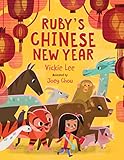
This beautiful story by Grace Lin is about family preparations for the new year celebration.
This Love Somebody resource will guide you through teaching a simple Orff arrangement with choices for games, movement, body percussion, and sixteenth note rhythms for Valentine’s Day and themes of caring and kindness.
How many times do you think, “I’d love to use this song in a concert but it’s so short?”
A BONUS B section has been added to offer some song length and variety for concerts AND the classroom. 💖 This B section would be a super cute opportunity to hold up giant candy hearts with LOVE quotes.
You hear grunts and groans! Is it the WWE? No, it’s an elementary music class! How can we engage and motivate students and build learning stamina?
These reactions happen when kids are challenged or bored or scared and don’t have the learning stamina they need to remain open-minded and perseverant. Building stamina will help students engage and stay motivated.
In this blog post, I’ll explore a creative approach to motivate and engage students by asking for more than is actually needed.